How to test your Quran memorisation and revise hifz with a listener
Recite from memory to someone, or something, that follows the mushaf and notes every slip. Test little and often in a fixed cycle, keep a list of weak ayahs, and drill them until they're clean.
On this page
To test your Quran memorisation, recite a passage from memory while someone, or something, follows the mushaf and notes every slip: a missed word, a changed word, a skipped ayah, a place where you needed a prompt. Do it little and often, in a fixed revision cycle, and keep a list of the ayahs that keep going wrong so you can drill them until they are clean. A teacher is best; a partner, a recording or a listener app fills the days in between.
Why testing matters
Memorising is only half of hifz; keeping it is the other half. A well-known hadith, reported by al-Bukhari and Muslim, compares the Quran to camels that slip their hobbles: without regular attention, what you memorised slips away. Huffaz often say the same from experience. Passages that felt solid a month ago come out with hesitations, and the mind starts jumping between similar verses.
Testing turns vague worry ("I think I know Surah Al-Kahf") into a list of exact places to fix ("ayah 22, the numbers; ayah 45, the jump to Yunus").
A revision cycle that works
Many hifz schools, especially in South Asia, split each day into three parts, often called sabaq, sabqi and manzil:
| Part | What it is | How it's tested |
|---|---|---|
| Sabaq | the new lesson | recited perfectly before moving on |
| Sabqi | the last few days' lessons | recited daily until they settle |
| Manzil | older memorisation, in rotation | a fixed portion each day, so everything comes round |
Other traditions use other names and sizes, but the shape is the same: new, recent, old. The point is that nothing goes untested for long. Someone who has memorised ten juz might revise one or two juz of manzil a day; a hafiz of the whole Quran might complete the cycle every week or two. Agree the numbers with your teacher.
Four ways to test yourself
1. Recite to a teacher
Nothing replaces it. A teacher hears your tajwid as well as your words, knows your habits, and can tell a slip from a gap in memorisation. If you can, recite your sabaq to a teacher every day.
2. Recite to a partner
A friend or family member holds the mushaf and follows. Agree the rules first: do they stop you at every mistake, or note them and tell you at the end? Do they prompt after a few seconds, or wait for you to ask? Swap roles: following someone else's recitation is good revision too.
3. Record yourself
Record a passage from memory on your phone, then play it back with the mushaf open. You'll hear hesitations you didn't notice while reciting. It takes as long as the recording, so it suits short passages.
4. Recite to a listener app
A listener app follows the mushaf for you and marks what you miss. With Samee there are two ways:
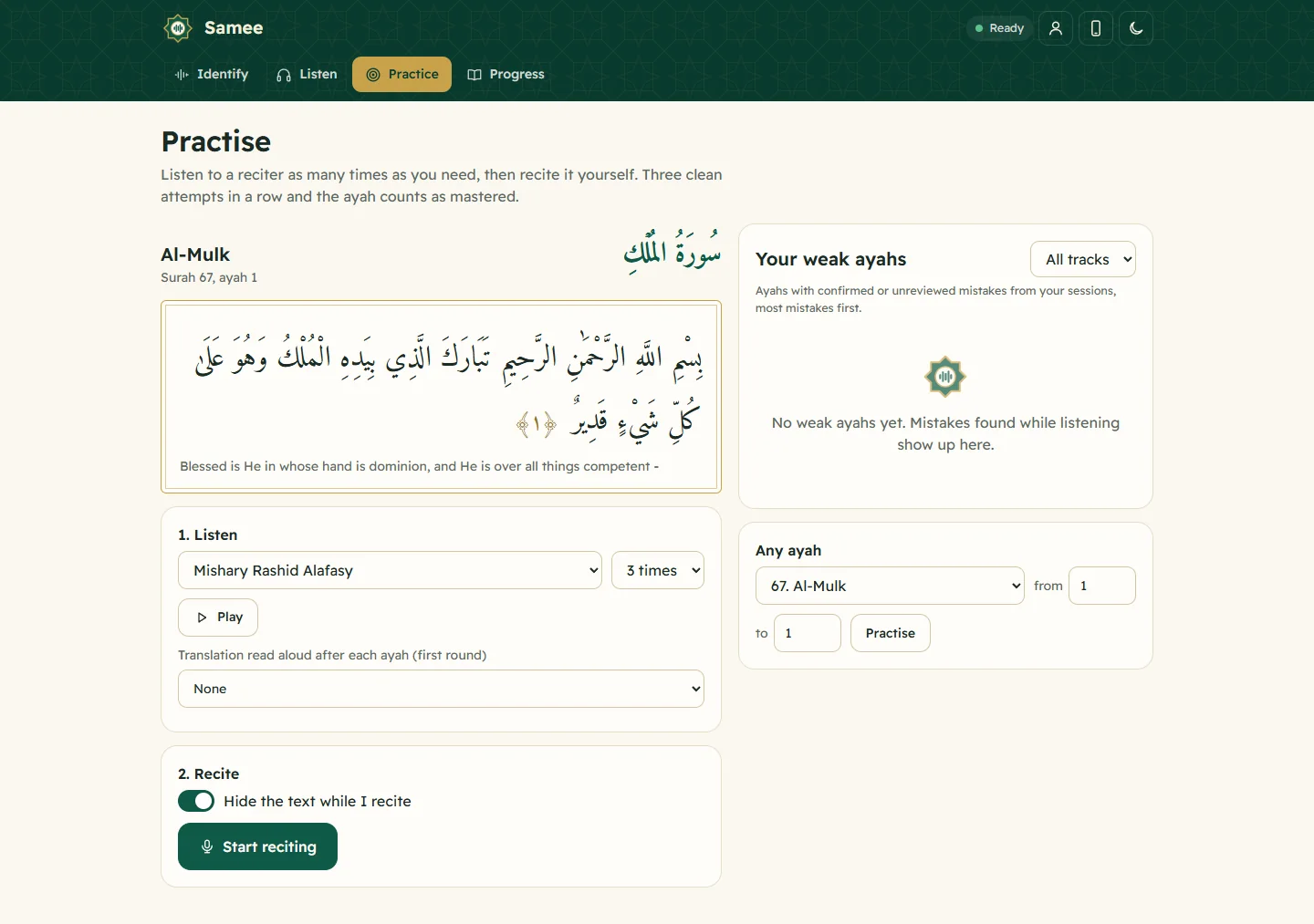
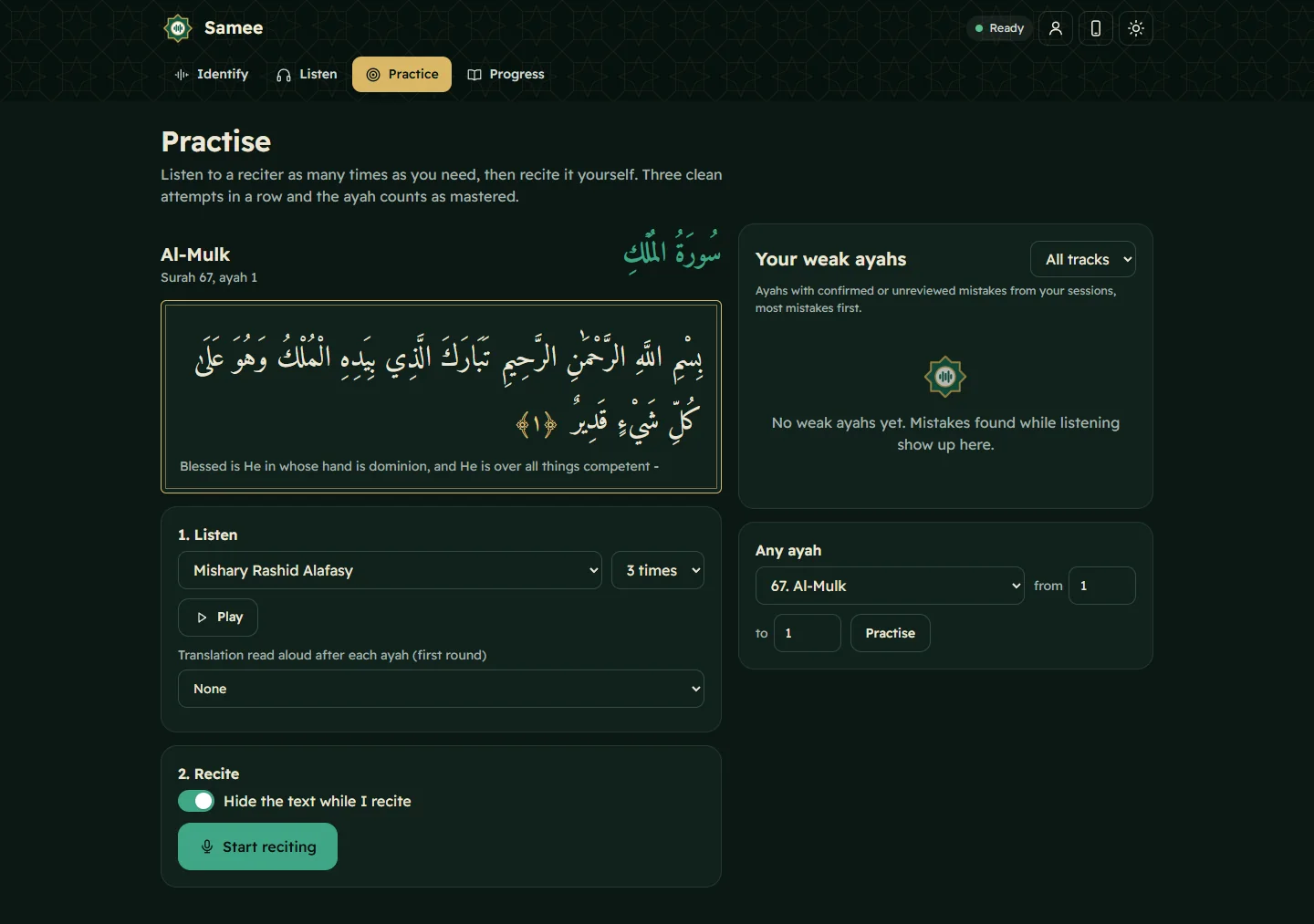
- Practice tab, up to 10 ayahs. Choose the ayahs, keep Hide the text while I recite on and tap Start reciting. The text stays hidden and fills in as you recite; missed and wrong words are marked; if you stop for about 4 seconds you get A hint: the next words. The result says Clean recitation or lists each mistake with a clip. Three clean attempts in a row mark the ayah Mastered.
- Listen tab, any length. For a page, a juz or your whole manzil, switch on Hifz test: hide the text until it is recited, choose where you start and recite. Every slip is saved in a report you can review afterwards.
Details are in hifz test and vowel check.
What to look for in a test
Count more than outright mistakes. These are the signs of a passage that needs work:
- Missed or added words, the clearest sign.
- Changed words, often a similar word from a similar ayah.
- Jumps: carrying on from a similar passage in another surah. Note both places.
- Hesitations: long pauses mid-ayah, even if you got there in the end.
- Prompts: every time you needed the next word.
- Repeats: going back to take a run at a difficult ayah.
Samee records most of these: jumps note when the two places start alike, and hesitations of about 3 seconds or more are marked Hesitated. Weak spots also tend to cluster at the beginnings of ayahs, at page turns and at the joins between surahs. Test those transitions on purpose.
Turn mistakes into a drill list
A test is only useful if it changes what you revise tomorrow.
- After each test, write down the ayahs with mistakes. In Samee, Your weak ayahs on the Practice tab does this for you, most mistakes first, and you can filter it by track.
- Listen to a good reciter recite each weak ayah several times. Samee plays any of its 26 reciters up to seven times in a row.
- Recite it with the text showing, then hidden, until it comes out clean three times running.
- Test it again in the next cycle. Ayahs that were weak once tend to be weak again.
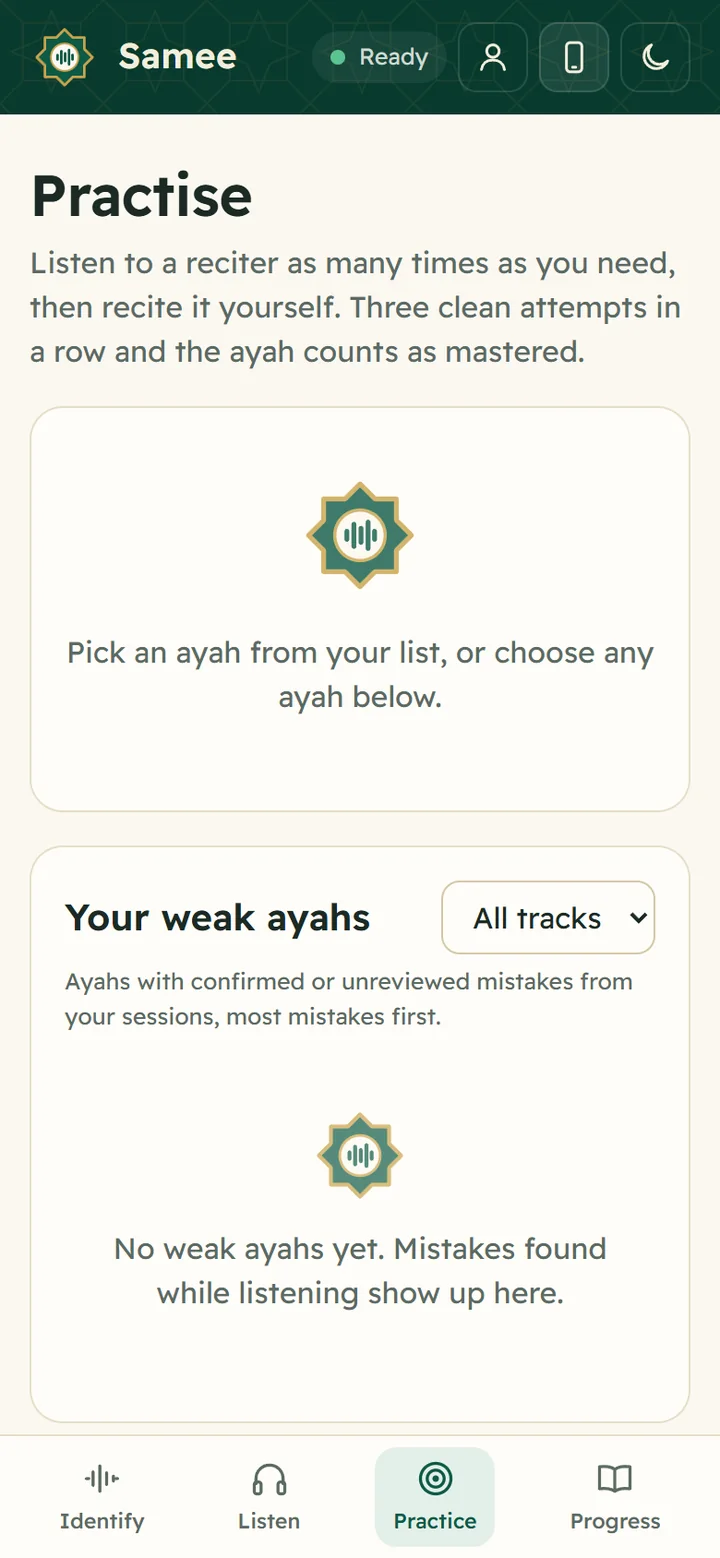
The practise your weak ayahs guide walks through the drill.
Keep a record per juz or per student
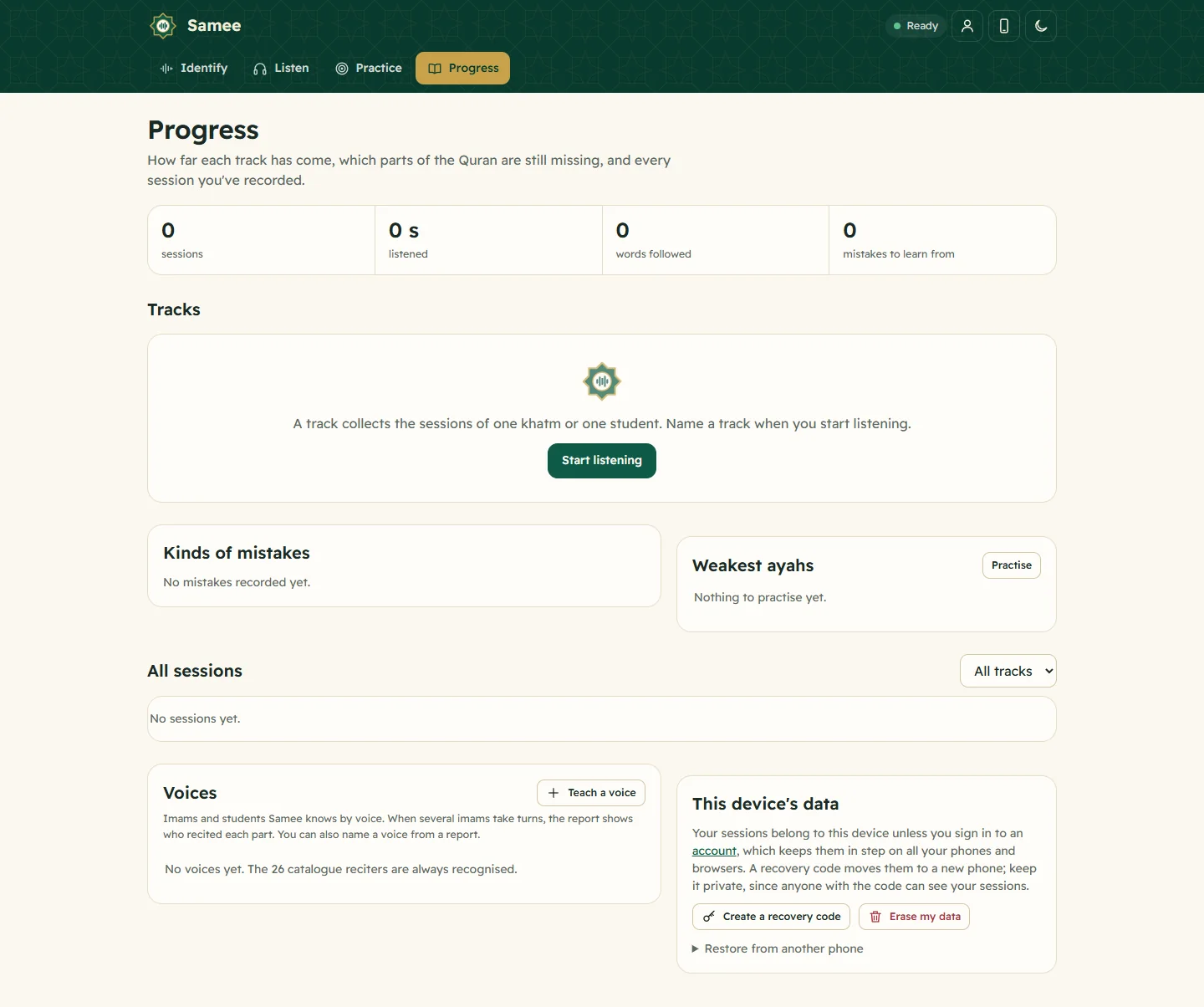
A record shows progress you can't feel day to day. In Samee, a track collects related sessions: one per juz you're revising, one for your manzil, or one per student for a teacher. Its khatm map shows which pages have been recited and where ayahs were skipped. Teachers will find more in tracking a student's hifz.
What an app can't test
A listener app checks that the right words come out in the right order. It doesn't hear everything a teacher hears. Samee doesn't judge madd lengths, ghunnah, the articulation points of letters or where you stop and start, and its experimental vowel check is a prompt to listen again, not a ruling. Some of its findings will be wrong, especially in a noisy room, which is why every one comes with a clip to check. The difference between word mistakes and finer tajwid mistakes is explained in lahn jali and lahn khafi.
Use the app for the daily repetitions, and keep your teacher for what only a teacher can do.
A simple weekly plan
| Day | Sabaq | Sabqi | Manzil | Test |
|---|---|---|---|---|
| Sat–Wed | new lines with the teacher | last 5 lessons | fixed portion | weak ayahs, hidden text |
| Thu | review the week's sabaq | the whole week | fixed portion | the week's sabaq, start to finish |
| Fri | rest or light review | none | larger portion | manzil, recorded and reviewed |
Adjust the sizes to your level; what matters is that every part is tested regularly.
Frequently asked questions
How can I test my hifz without a teacher?
Recite from memory while something follows the text: a partner holding the mushaf, a recording you check afterwards, or a listener app that hides the text and marks missed or wrong words. Keep reciting to a teacher when you can, for the tajwid.
How often should I revise what I've memorised?
Every day, in a fixed cycle: the new lesson, the last few days' lessons, and a portion of older memorisation so that everything comes round regularly. How large each portion is depends on how much you have memorised.
What counts as passing a hifz test?
Teachers set their own standard. A common one is reciting the passage without being prompted and without missed, added or changed words. In Samee, three clean attempts in a row mark an ayah as mastered.
Can an app check my tajwid?
Only in part. Samee checks the words and, experimentally, the short vowels and shadda. The finer rules of tajwid, such as madd lengths, ghunnah and the articulation of letters, still need a qualified teacher's ear.
Was this post helpful?