Lahn jali and lahn khafi: common mistakes in Quran recitation
Lahn jali is a clear mistake that changes a letter, vowel or word; scholars agree it must be avoided. Lahn khafi breaks finer tajwid rules without changing the word; its ruling is discussed.
On this page
In Quran recitation, lahn (لحن) means a mistake. Scholars of tajwid divide it into two kinds. Lahn jali, the clear mistake, changes the word itself: a different letter, a different vowel, a dropped shadda, a missing or added word. It can change the meaning, and scholars agree it must be avoided. Lahn khafi, the hidden mistake, breaks the finer rules of tajwid, such as the length of a madd or a ghunnah, without changing the word. It is usually noticed only by people trained in tajwid, and scholars discuss how serious it is.
This article explains both with common examples, and is honest about which of them a listening app can catch. Treat it as an introduction: tajwid is learned by reciting to a qualified teacher.
Lahn jali: the clear mistake
Jali means clear or obvious. These are mistakes that most listeners who know Arabic, or who know the passage, would notice.
Changing a vowel
A single vowel can change who is speaking or what is meant. The classic example comes from Al-Fatiha: أَنْعَمْتَ عَلَيْهِمْ (an'amta, "You have favoured") recited as أَنْعَمْتُ (an'amtu, "I have favoured"). One vowel moves the favour from Allah to the person reciting.
Changing a letter
Mistakes between letters that sound alike to a non-Arab ear are among the most common:
| Written | Often replaced by |
|---|---|
| ح (ḥā) | ه (hā) |
| ع ('ayn) | ء (hamza) |
| ض (ḍād) | د (dāl) or ظ (ẓā) |
| ق (qāf) | ك (kāf) |
| ث (thā) | س (sīn) |
| ذ (dhāl) | ز (zāy) |
| ص (ṣād) | س (sīn) |
Each of these produces a different word, sometimes with a different meaning, sometimes with none.
Dropping or adding a shadda
The shadda doubles a letter. Dropping it, as in إِيَّاكَ recited without the doubled yā, or adding one where there is none, changes the word's form. Teachers often use إِيَّاكَ in Al-Fatiha as an example because it is recited so often.
Lengthening or shortening a vowel into another word
Stretching a short vowel into a long one, or cutting a long vowel short, can turn one word into another, for example a singular into a dual.
Missing, adding or changing words
Strictly, scholars of tajwid speak of lahn for mistakes of pronunciation. But in practice, especially when reciting from memory, the most common errors are at the level of words and ayahs: leaving a word out, adding one, swapping a word for a similar one, skipping an ayah, or carrying on from a similar passage in another surah. These are as clear as any lahn jali and, for a hafiz, often more frequent.
Lahn khafi: the hidden mistake
Khafi means hidden. These mistakes leave the word intact but break the rules that govern how it should be pronounced. Examples:
- Madd (lengthening): shortening a madd muttasil that should be held for four or five counts, or making all madds the same length.
- Ghunnah: not giving the nasal sound its two counts on a doubled nūn or mīm, as in إِنَّ or ثُمَّ.
- Ikhfa, idgham, iqlab: pronouncing a nūn sākinah or tanwīn clearly where it should be hidden, merged or changed.
- Qalqalah: no "echo" on ق ط ب ج د when they carry a sukun.
- Heavy and light letters: a heavy rā where it should be light, or the lām of the name of Allah light after a fatha or damma, where it should be heavy.
- Overdoing it: exaggerated qalqalah, over-long ghunnah or stretched vowels are also mistakes.
What scholars say
Scholars agree that lahn jali must be avoided, because it changes the words of the Quran, and that someone who makes it should learn to correct it. Whether, and when, a mistake of this kind affects the validity of a prayer is a question of fiqh that the schools answer in detail; ask a scholar.
About lahn khafi there is more discussion. Ibn al-Jazari, in his well-known poem on tajwid, al-Muqaddimah, holds that applying tajwid is required and that leaving it is a sin. Many later scholars distinguish: the rules that protect the words are required, while the finer points are described as disliked to neglect rather than sinful, especially for someone still learning. Most agree that a person who cannot yet recite well should keep reciting while working to improve; a hadith in al-Bukhari and Muslim gives a double reward to the one who recites with difficulty.
If you are unsure how this applies to you, ask your teacher or a scholar you trust.
Which mistakes can a listener app catch?
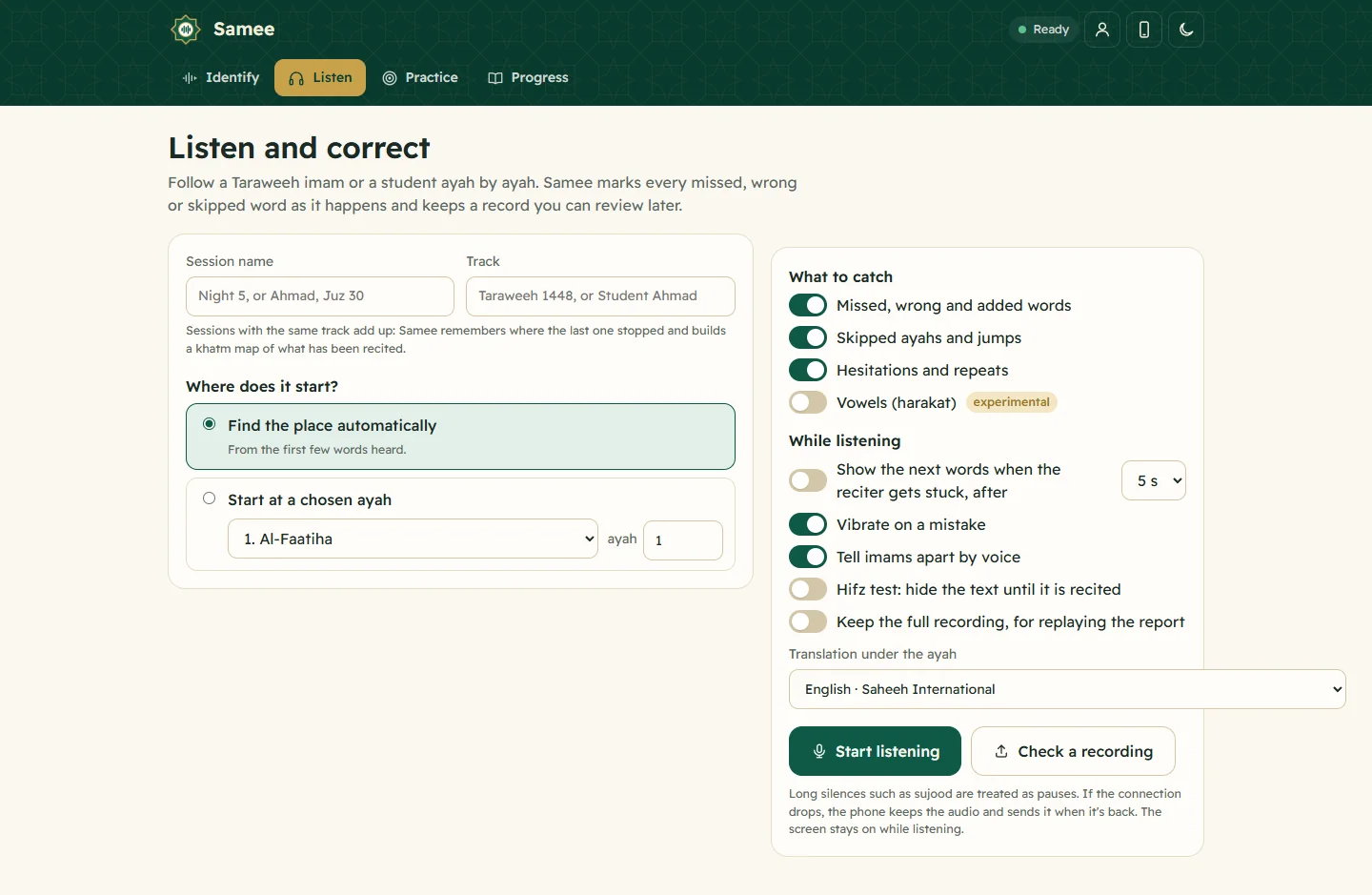
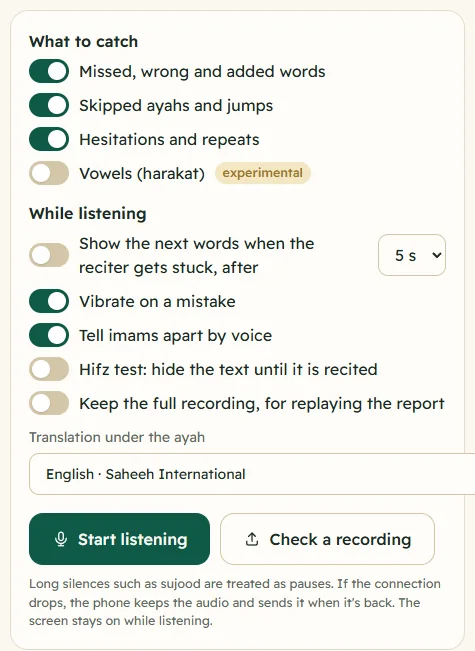
Apps that follow recitation, such as Samee, are good at some of these and unable to judge others. In Samee's case:
| Mistake | Kind | Samee |
|---|---|---|
| Missed, added or wrong word | clear | Yes: Missed word, Added word, Wrong word |
| Skipped ayah, jump to a similar passage | clear | Yes: Skipped ayah, Jumped to another place |
| Hesitation, repeating a word | not lahn, but worth noting | Yes: Hesitated, Repeated |
| Wrong short vowel, missing shadda | clear | Experimental: Vowel may differ, or Check my vowels |
| A letter replaced by a similar one | clear | Sometimes, as Sounded different or Wrong word |
| Madd length, ghunnah, ikhfa, qalqalah | hidden | No |
| Heavy and light letters | hidden | No |
The vowel check is experimental: on clean recordings it caught single altered vowels in the developer's tests, but real rooms produce false alarms, so every flag is a prompt to listen again. Each finding comes with a short audio clip so you can judge by ear. How each finding is labelled is explained in what each marked mistake means.
How to fix the mistakes you make
- Recite to a teacher. Tajwid is passed on by hearing and imitating, from teacher to student. A teacher hears lahn khafi that no app will.
- Learn the letters first. Most lahn jali among non-Arab reciters comes from a handful of letters. Drill their articulation points slowly.
- Listen to a slow, clear reciter. A teaching recitation, such as Al-Husary's muallim, lets you hear each letter and copy it. See recitation styles explained.
- Record and compare. Recite an ayah, then play the reciter, then yourself again.
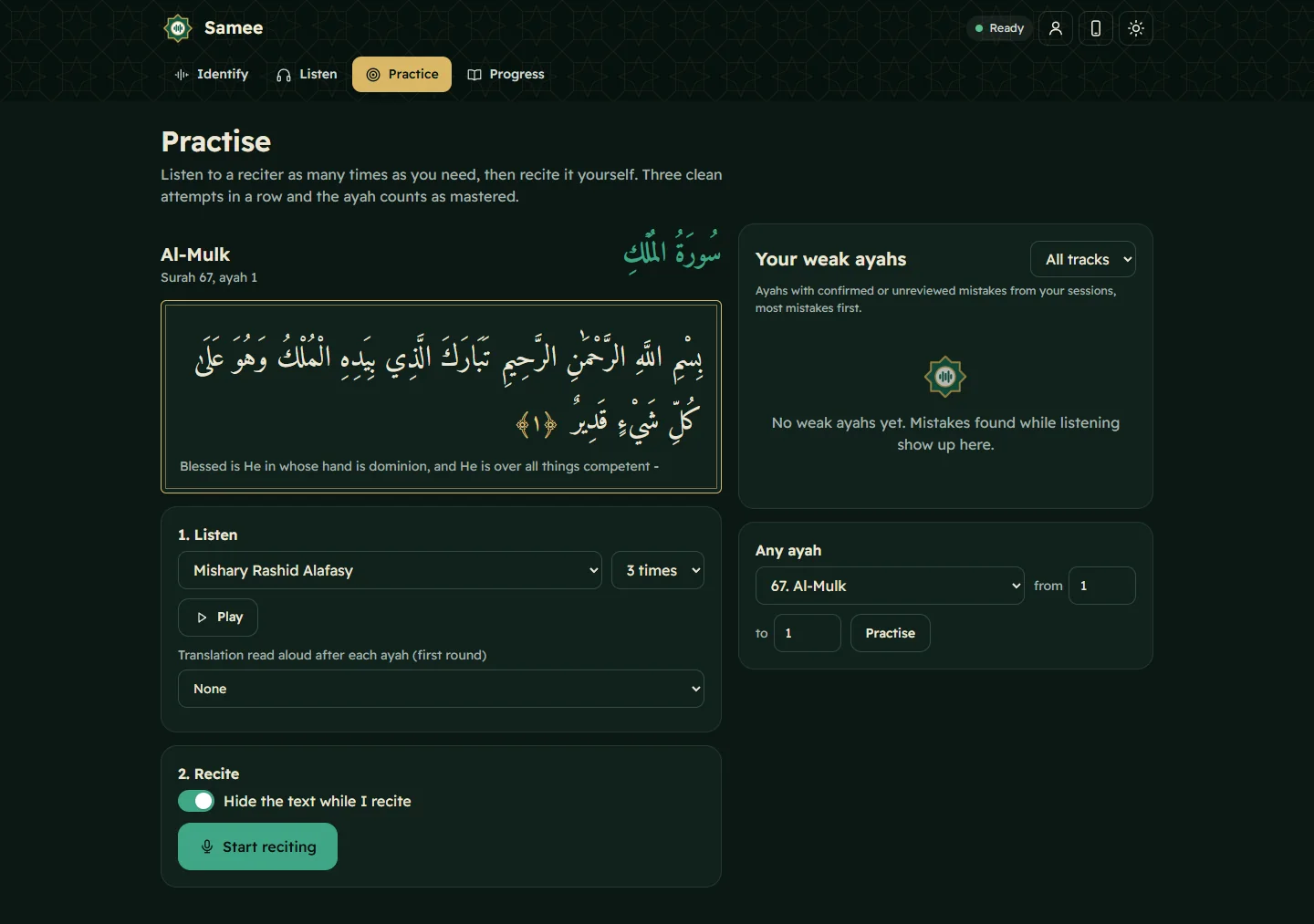
- Drill your weak ayahs. Keep a list of the places where mistakes recur and repeat them until they're clean. Samee's Practice tab keeps that list for you.
Small, regular corrections add up. Recite every day, carefully, and let a teacher check the details.
Frequently asked questions
What is lahn jali?
A clear mistake in recitation that changes the structure of the word: a different letter, a different vowel, a missing shadda, or a word dropped or added. It can change the meaning, and scholars agree it must be avoided.
What is lahn khafi?
A hidden mistake: breaking the finer rules of tajwid, such as shortening a madd, dropping a ghunnah or not doing ikhfa, without changing the word itself. It's usually noticed by those trained in tajwid.
Is lahn khafi a sin?
Scholars discuss this. Some, following Ibn al-Jazari, hold that applying tajwid is required of those able to learn it; others describe lahn khafi as disliked rather than sinful. Ask a qualified teacher or scholar about your own situation.
Can an app detect tajwid mistakes?
Partly. A listener such as Samee catches word-level mistakes and, experimentally, changed short vowels and a missing shadda. It doesn't judge madd lengths, ghunnah or the fine articulation of letters, which need a teacher.
Was this post helpful?