Blog
Explainers
How things work, in plain words.
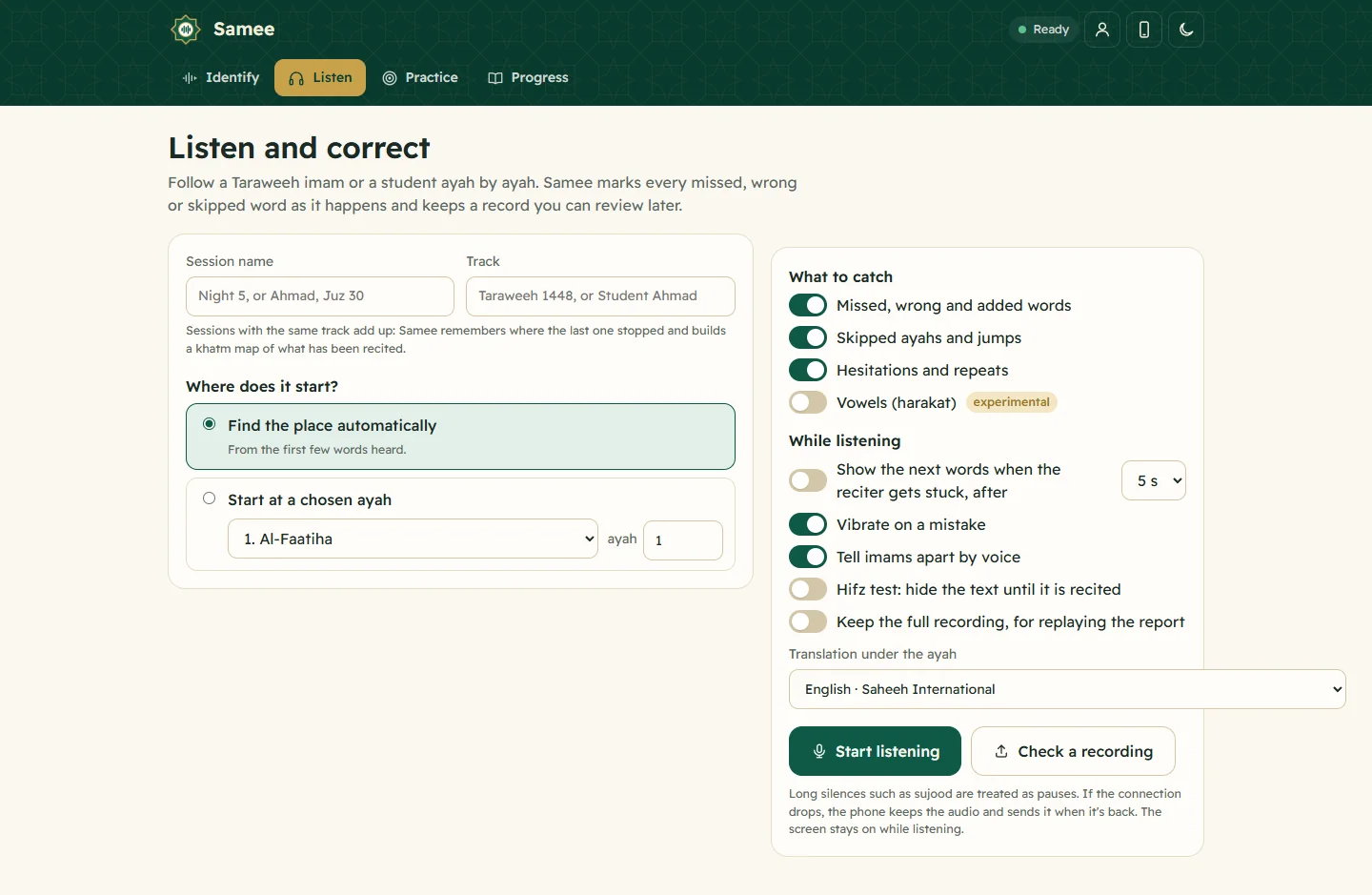
What is talqeen? Prompting a Quran reciter who gets stuck
Talqeen means having someone take words from you. In Quran learning it is teaching by recitation and repetition, and prompting a reciter who stops with the next words; in prayer, prompting the imam.
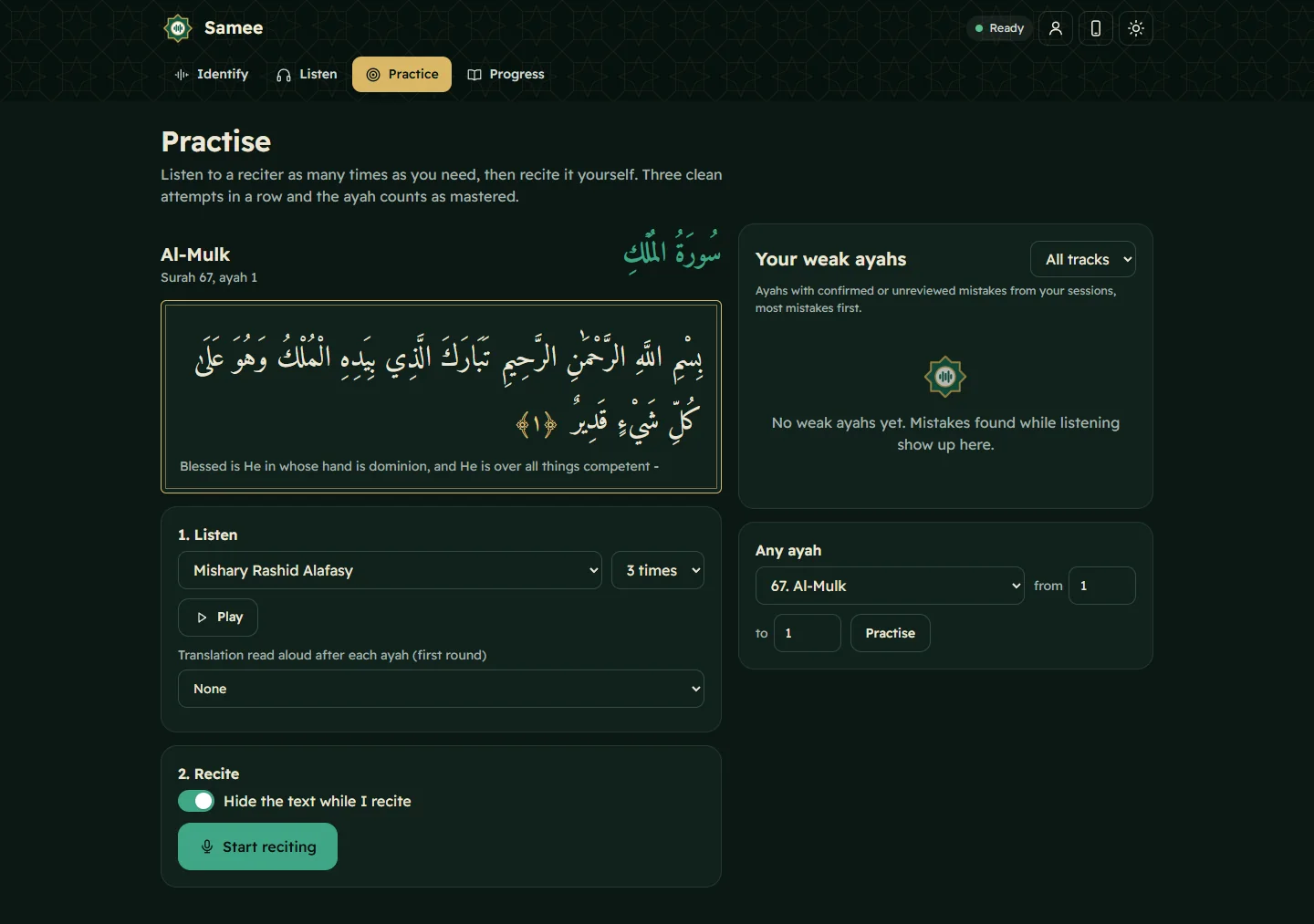
Murattal, mujawwad and muallim: Quran recitation styles explained
Murattal is measured recitation at a steady pace; mujawwad is slower and more melodic, for listening gatherings; muallim is a teaching recitation for repeating after. All keep the same tajwid.
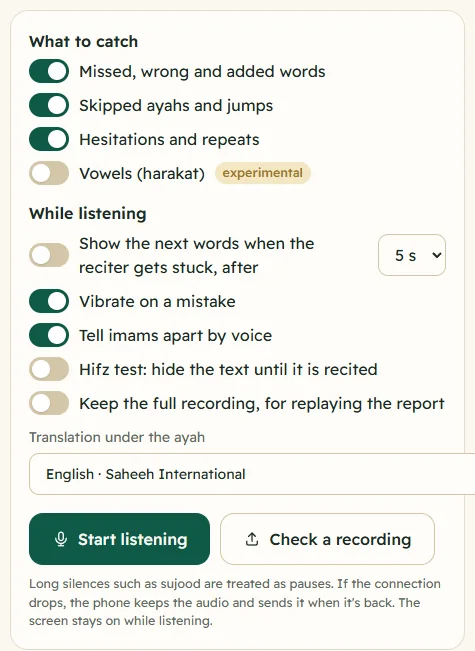
Lahn jali and lahn khafi: common mistakes in Quran recitation
Lahn jali is a clear mistake that changes a letter, vowel or word; scholars agree it must be avoided. Lahn khafi breaks finer tajwid rules without changing the word; its ruling is discussed.
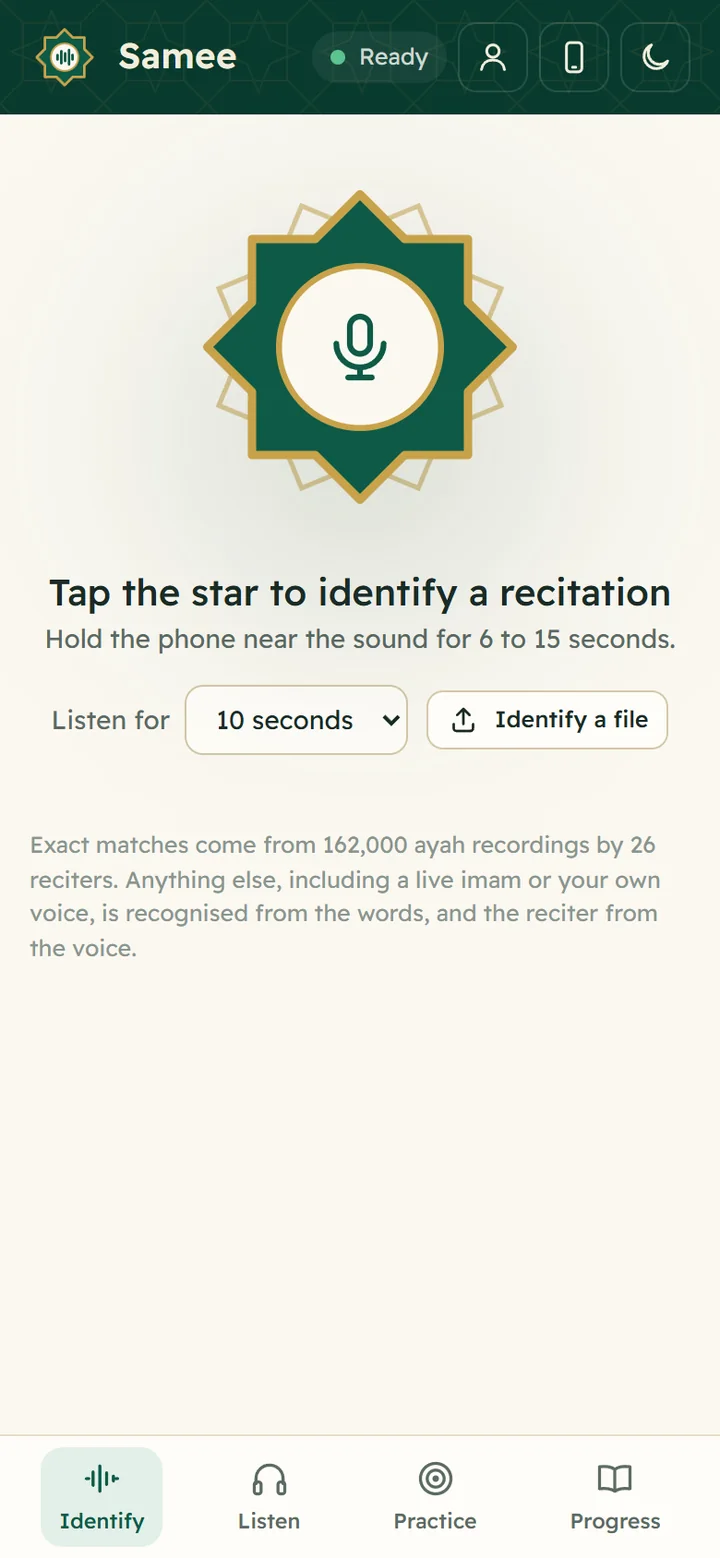
How to identify a Quran recitation: a 'Shazam for Quran' explained
Record a few seconds with an app that recognises Quran audio. It matches the sound against known recordings, or recognises the words and finds them in the Quran, then names the reciter by voice.
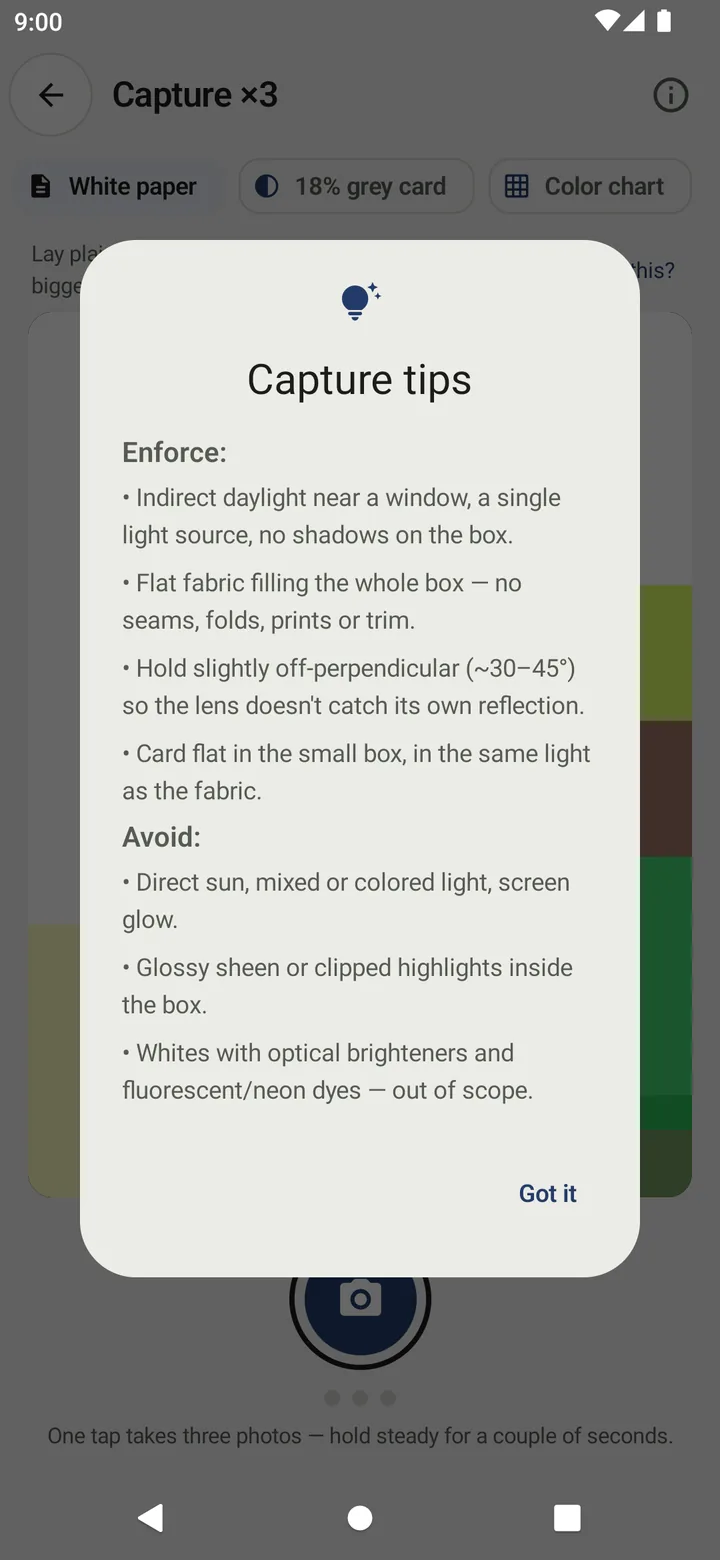
Metamerism: why lighting changes fabric colour
Metamerism is when two fabrics match under one light but not another, because their reflectance spectra differ. Check matches under several standard lights before approval.
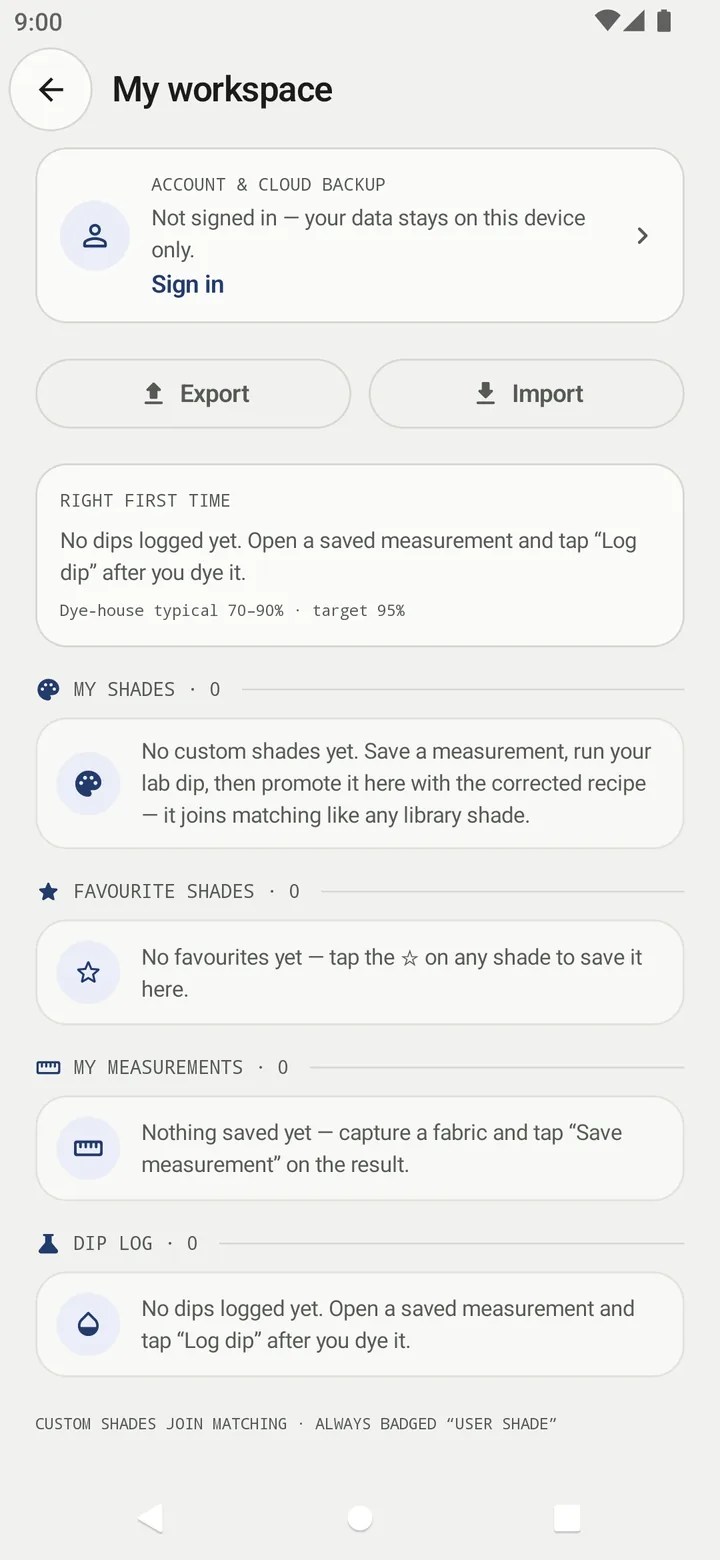
The lab dip process in textile dyeing, step by step
A lab dip is a small trial dyeing that proves a recipe before bulk. You dye swatches of the real fabric, compare them with the standard under agreed lights, correct and submit.
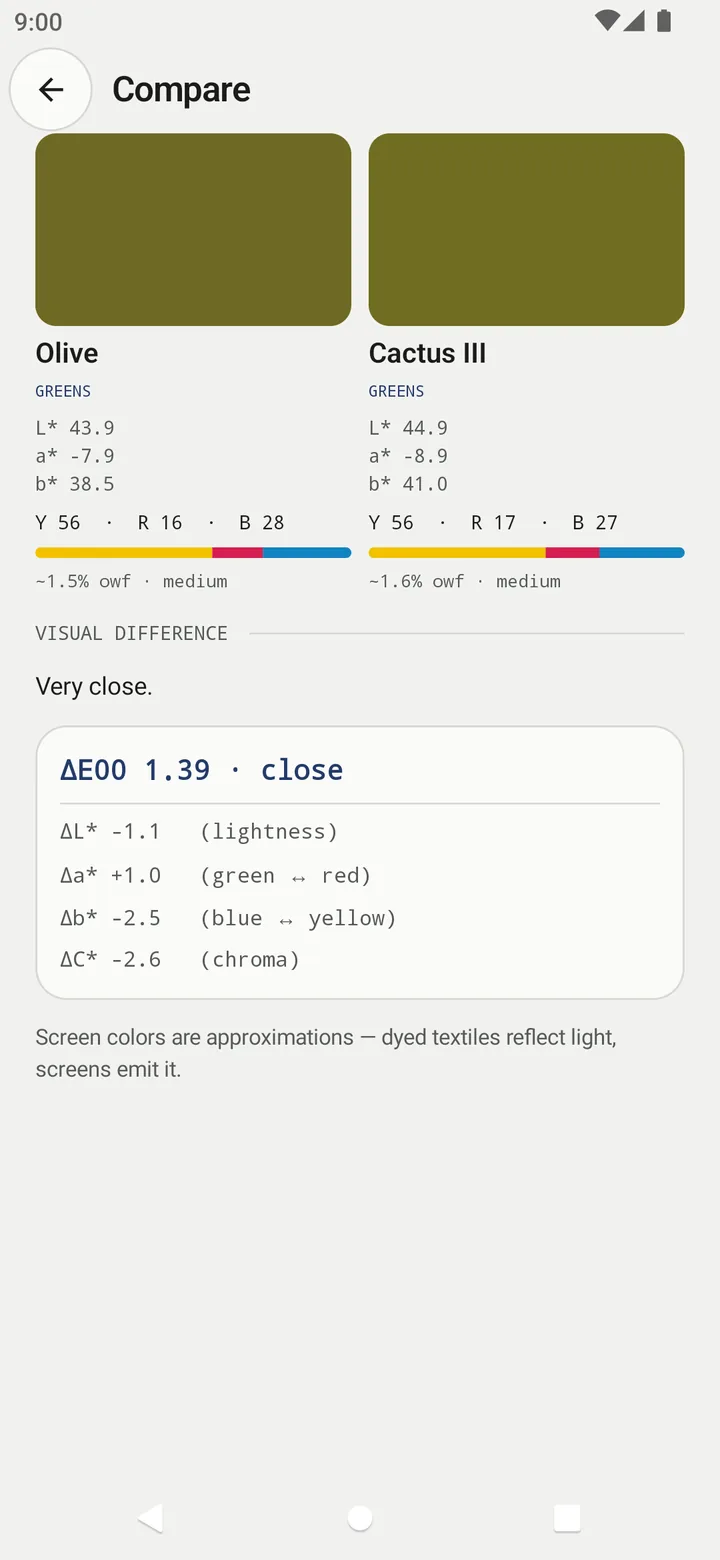
CIELAB and Delta E (ΔE2000) explained for dyers
CIELAB turns a colour into three numbers: L* (lightness), a* (green–red) and b* (blue–yellow). Delta E is the distance between two colours; ΔE2000 weights it like the eye.

Why offline prayer times matter, and what really works without signal
Prayer times come from the sun and a mosque's timetable, and neither needs a live connection once it's on your phone. A well-built app keeps times, alarms and the Qibla working when the signal drops.
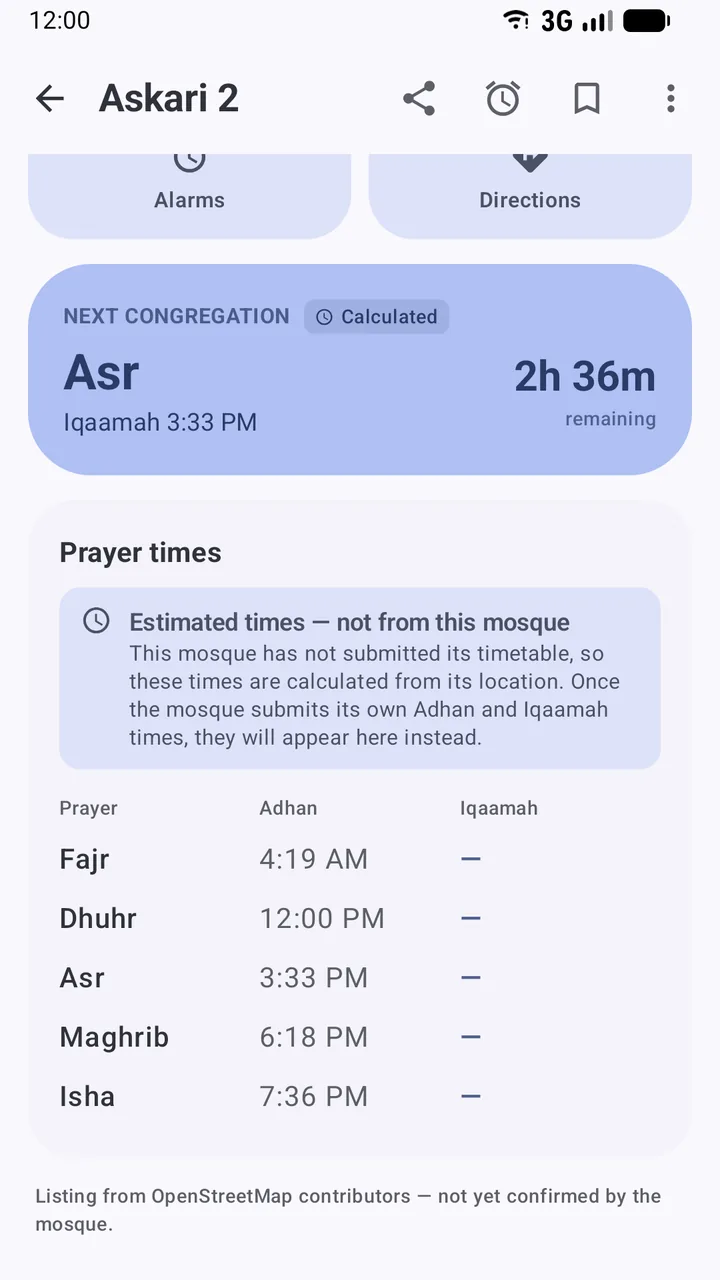
How prayer times are calculated: Fajr angles, methods and Asr
Prayer times follow the sun where you are: Dhuhr after solar noon, Asr by shadow length, Maghrib at sunset, and Fajr and Isha at a set angle below the horizon.
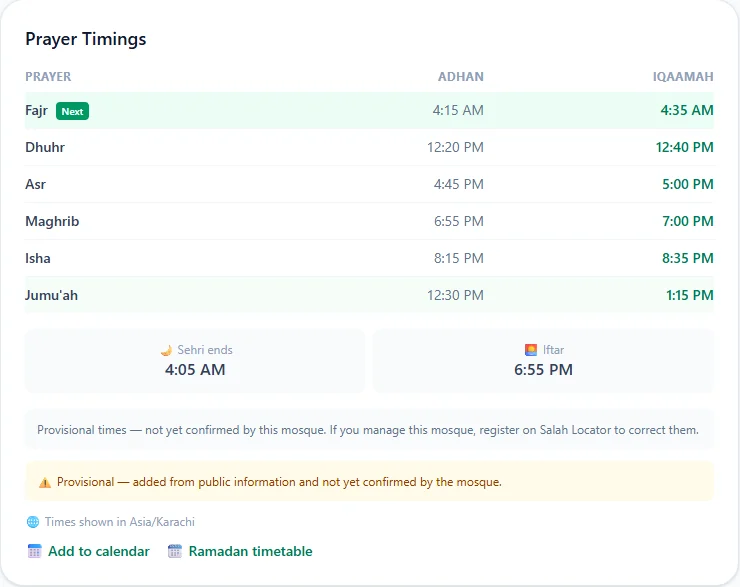
Adhan vs Iqamah: what's the difference and why it matters
The Adhan is the call to prayer that marks the start of a prayer's time; the Iqamah is the second call, made as the congregation stands. To pray in congregation, go by the Iqamah time.