Abdohoo.App
Shadecard on the blog
Guides, explainers and product news from Abdohoo.App Solutions, for shopkeepers, mosque communities, Quran students and dyeing masters.
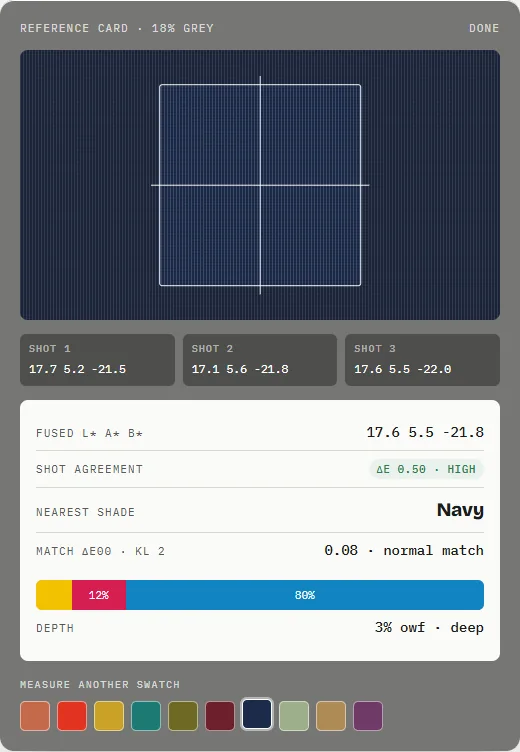
What is trichromatic dyeing? Yellow, red and blue explained
Trichromatic dyeing builds a shade from three compatible dyes – a yellow, a red and a blue. The ratio sets the hue, the total depth (% owf) sets how dark, and a lab dip confirms.
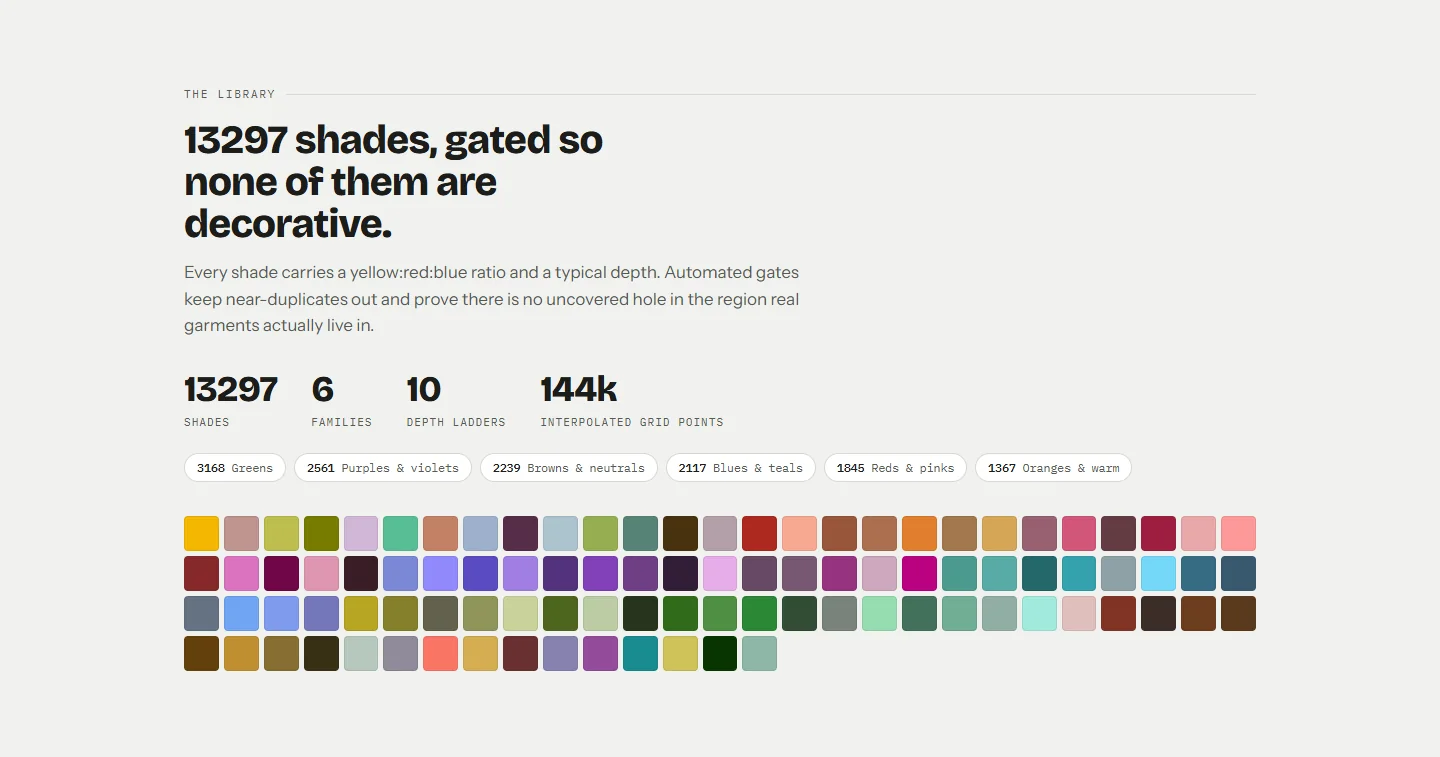
Shadecard 0.9: a redesigned app and a library of 13,297 shades
Shadecard for Android 0.9 brings a redesigned home screen, plain white paper as the everyday reference, and a shade library that grew from 466 to 13,297 shades.
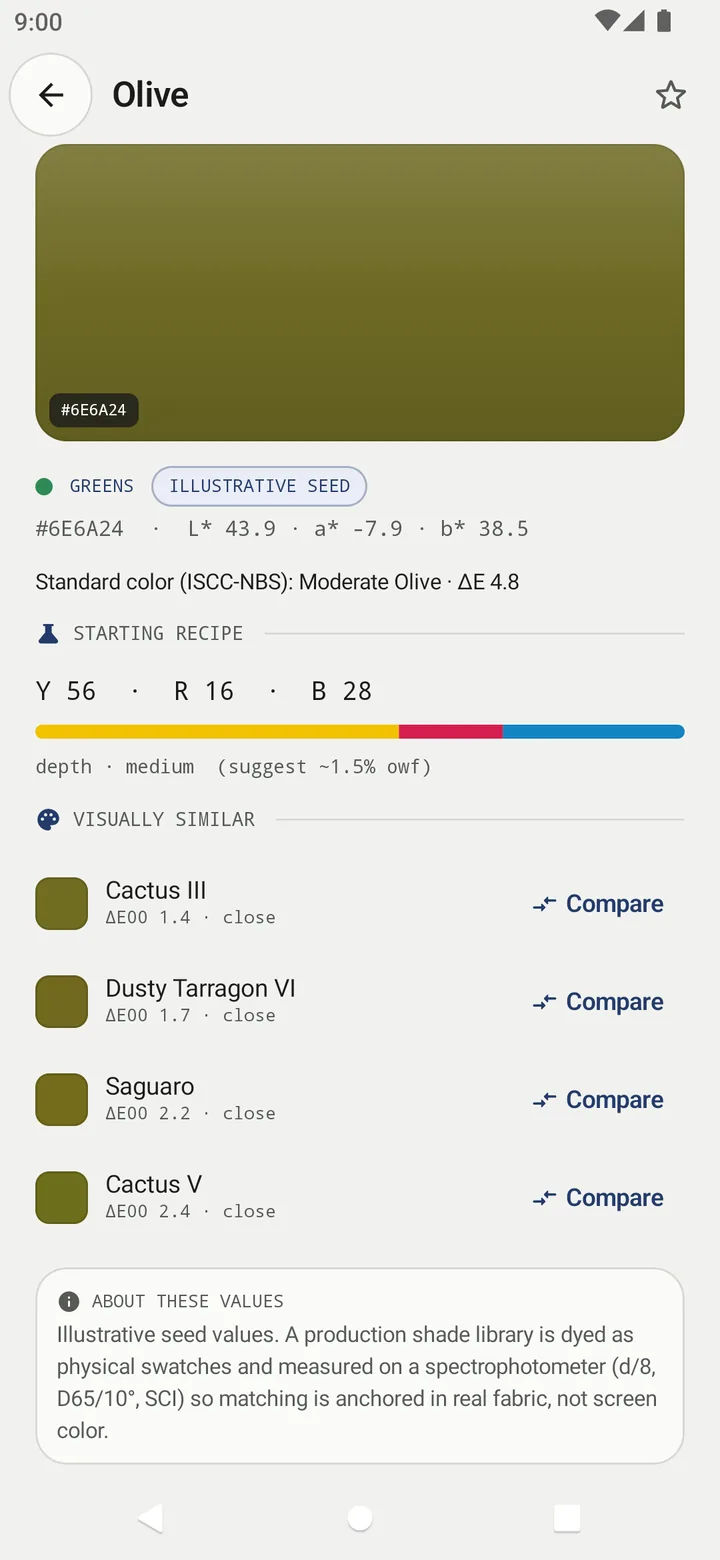
Shade cards and colour naming systems in textiles
A shade card is a set of colour samples used to specify colour. Names like "olive" are ambiguous; systems such as Munsell, ISCC-NBS and CIELAB tie a name or code to a position.
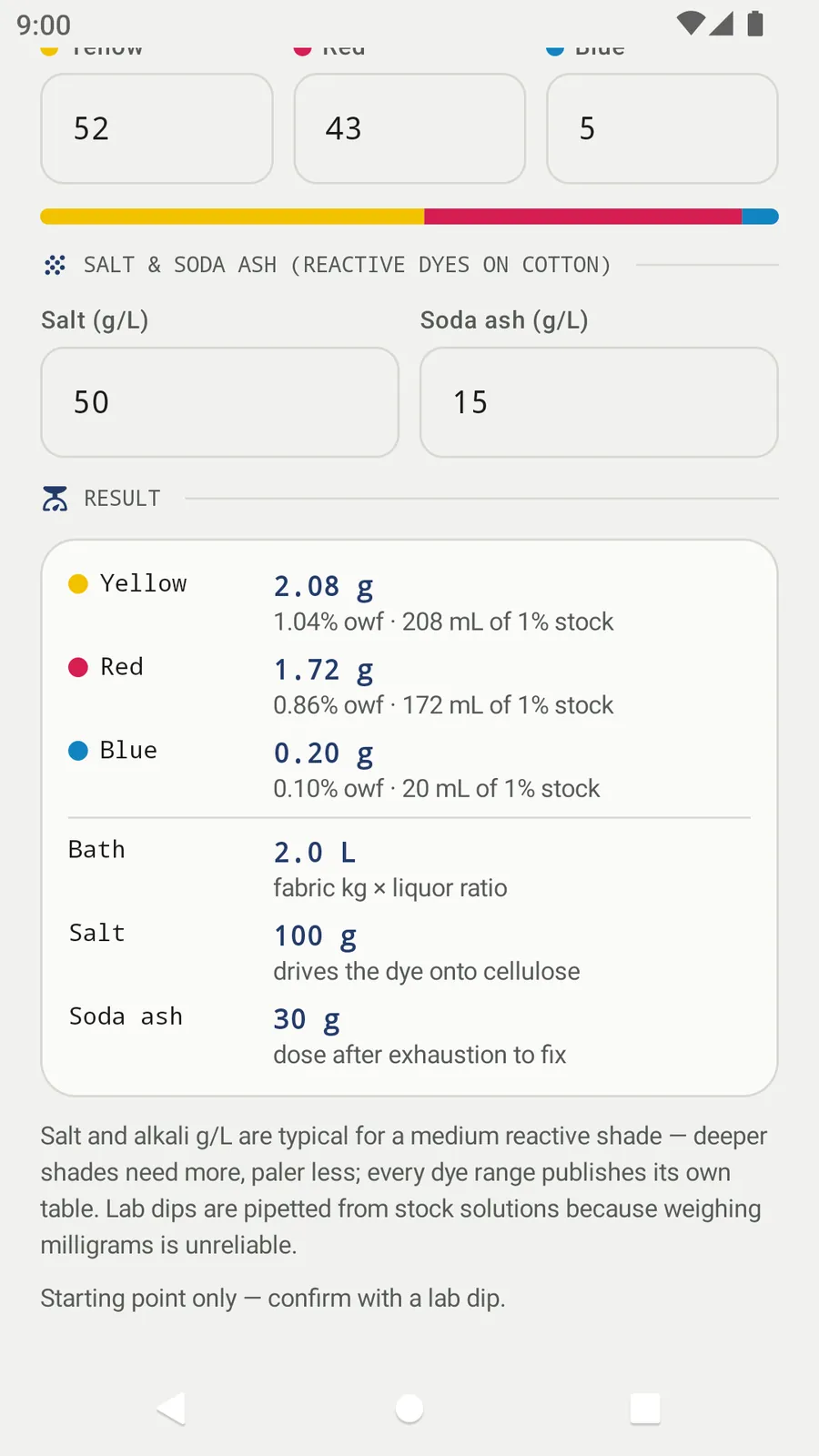
Reactive dyeing basics: why salt and soda ash (and how to stay safe)
In reactive dyeing of cotton, salt pushes the dye onto the fibre (exhaustion) and soda ash raises the pH so the dye bonds to it (fixation). Unfixed dye must be washed off.
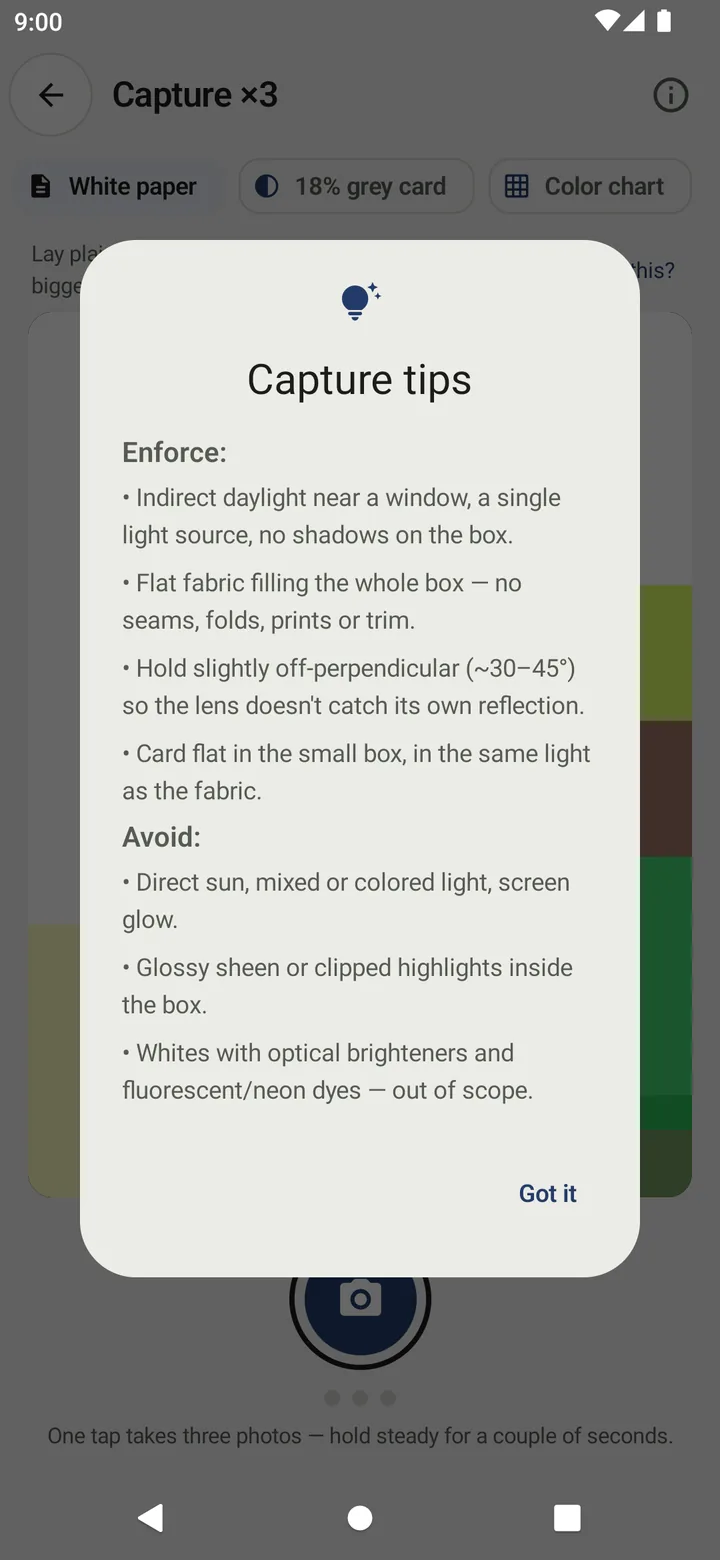
Metamerism: why lighting changes fabric colour
Metamerism is when two fabrics match under one light but not another, because their reflectance spectra differ. Check matches under several standard lights before approval.
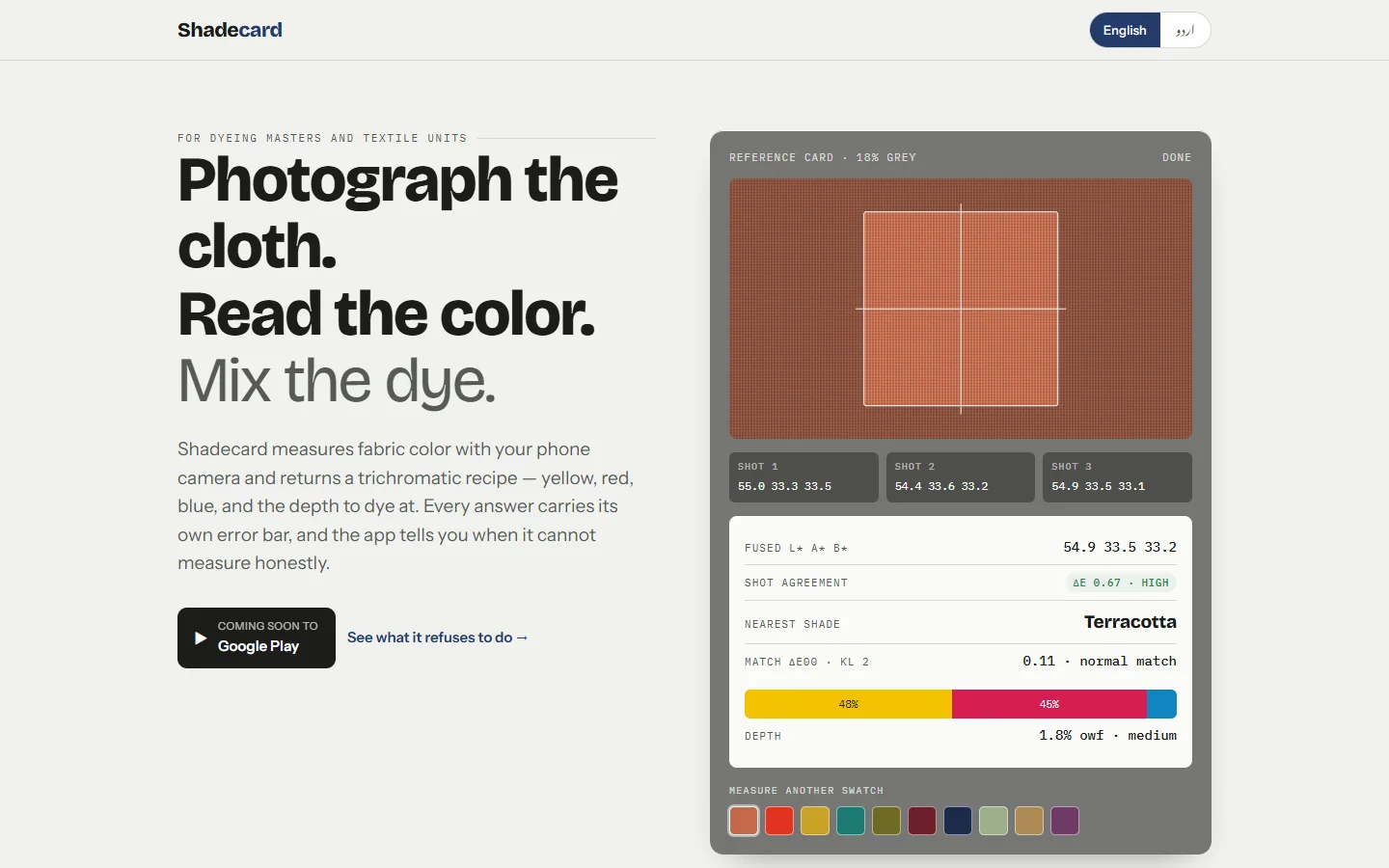
How to match a fabric colour with your phone camera
A phone can get you close to a fabric's colour if you control the light, put a known reference (white paper or a grey card) in the frame, average several shots and lab dip.
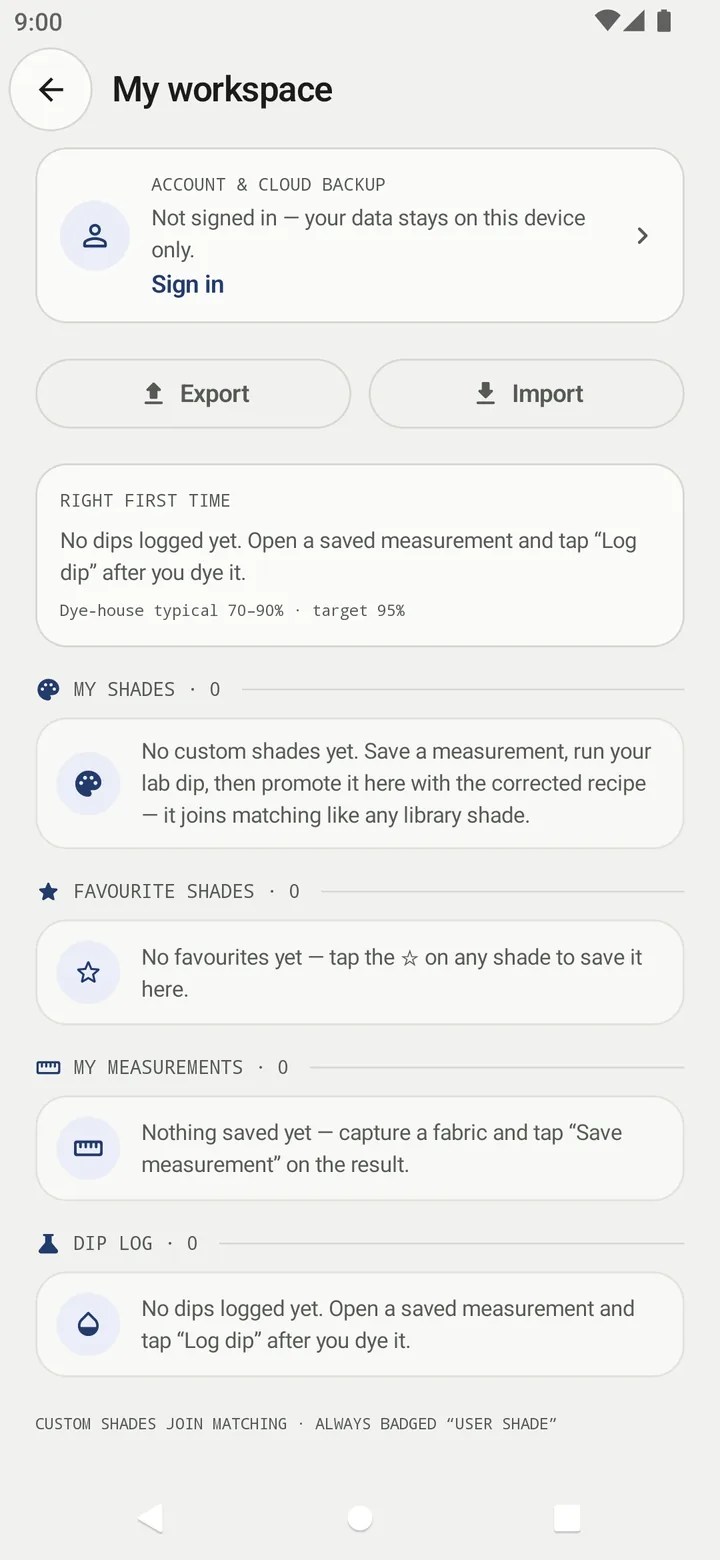
The lab dip process in textile dyeing, step by step
A lab dip is a small trial dyeing that proves a recipe before bulk. You dye swatches of the real fabric, compare them with the standard under agreed lights, correct and submit.
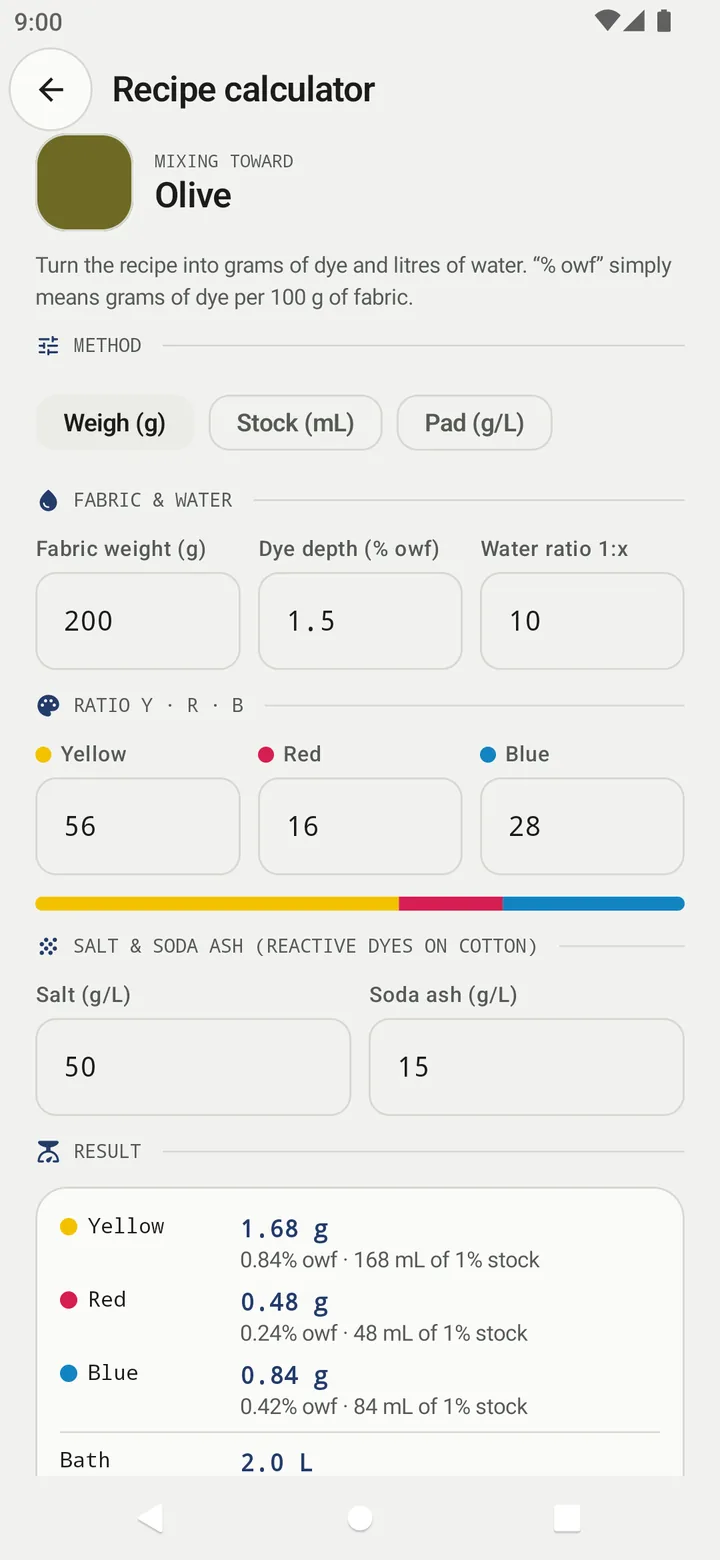
How to make and use a dye stock solution for lab dips
A 1% w/v stock is 1 g of dye made up to 100 mL. To dose a recipe, pipette mL = grams of dye × 100 ÷ stock %. Use a 0.1% stock for pale components so the volumes stay measurable.
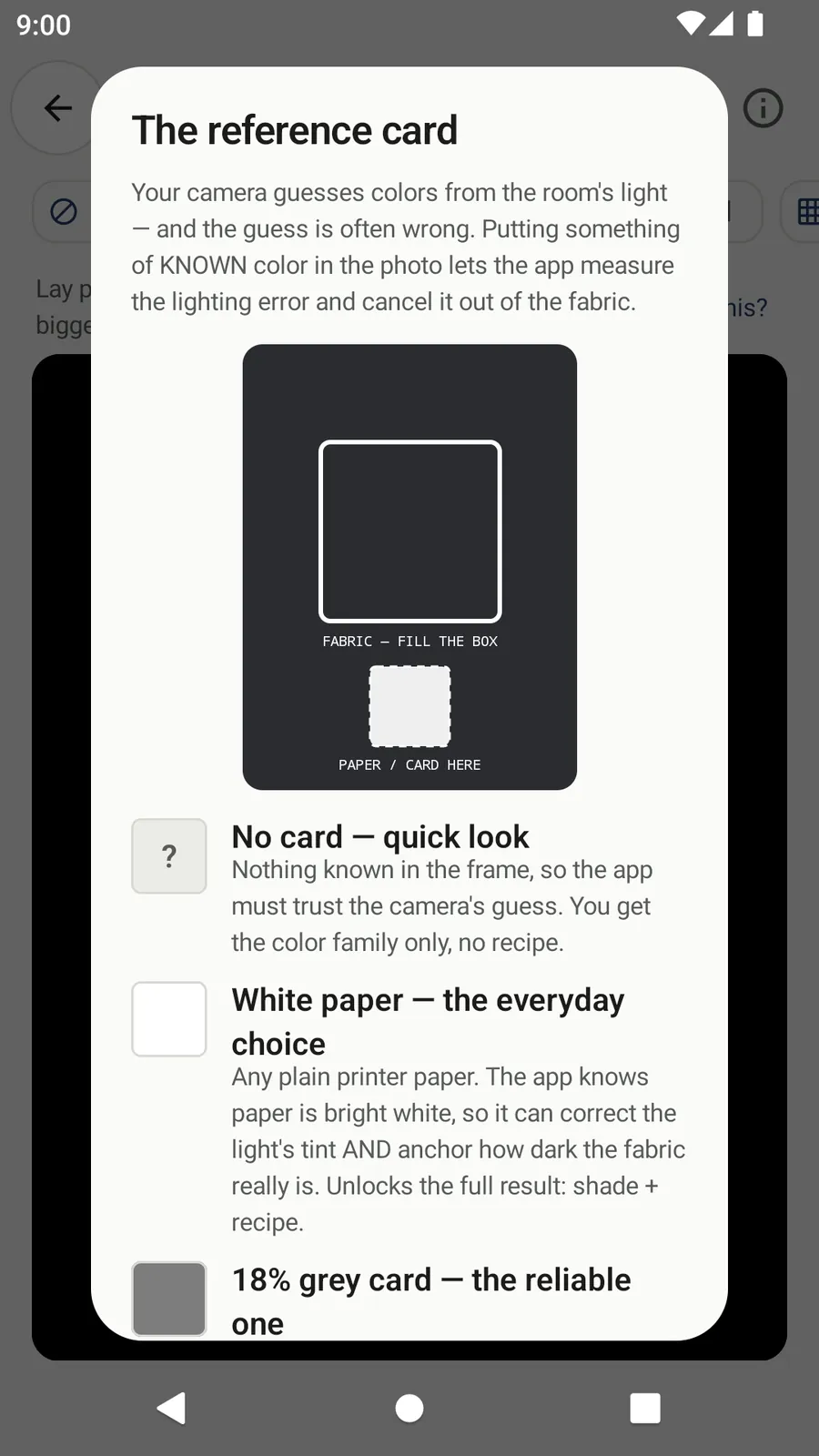
Grey card vs white paper for colour correction
Both give the camera a known neutral to correct white balance and brightness. White paper is free and good enough for everyday work; an 18% grey card is more consistent and clips less.
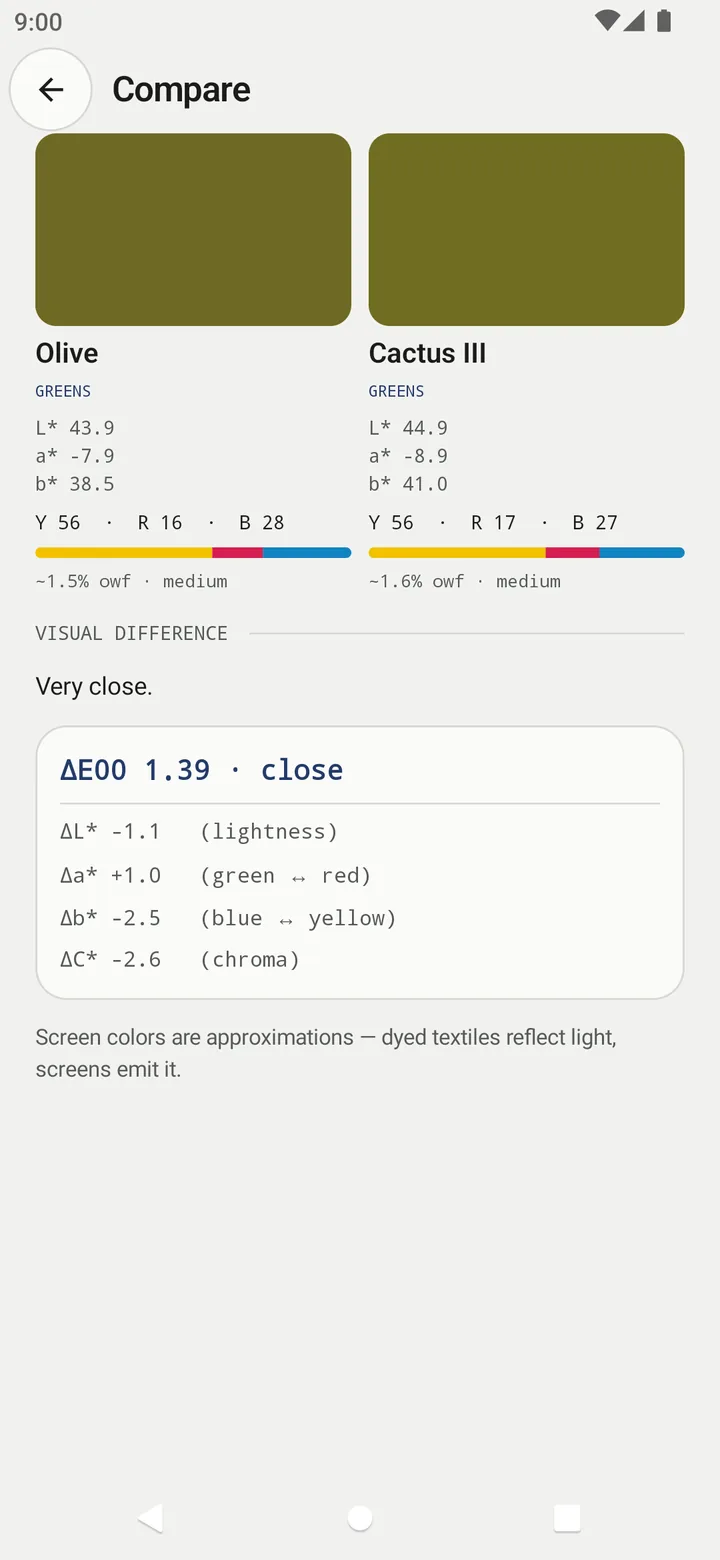
CIELAB and Delta E (ΔE2000) explained for dyers
CIELAB turns a colour into three numbers: L* (lightness), a* (green–red) and b* (blue–yellow). Delta E is the distance between two colours; ΔE2000 weights it like the eye.