Topic
#ramadan
Articles about ramadan from the Abdohoo.App Solutions blog and help centre.
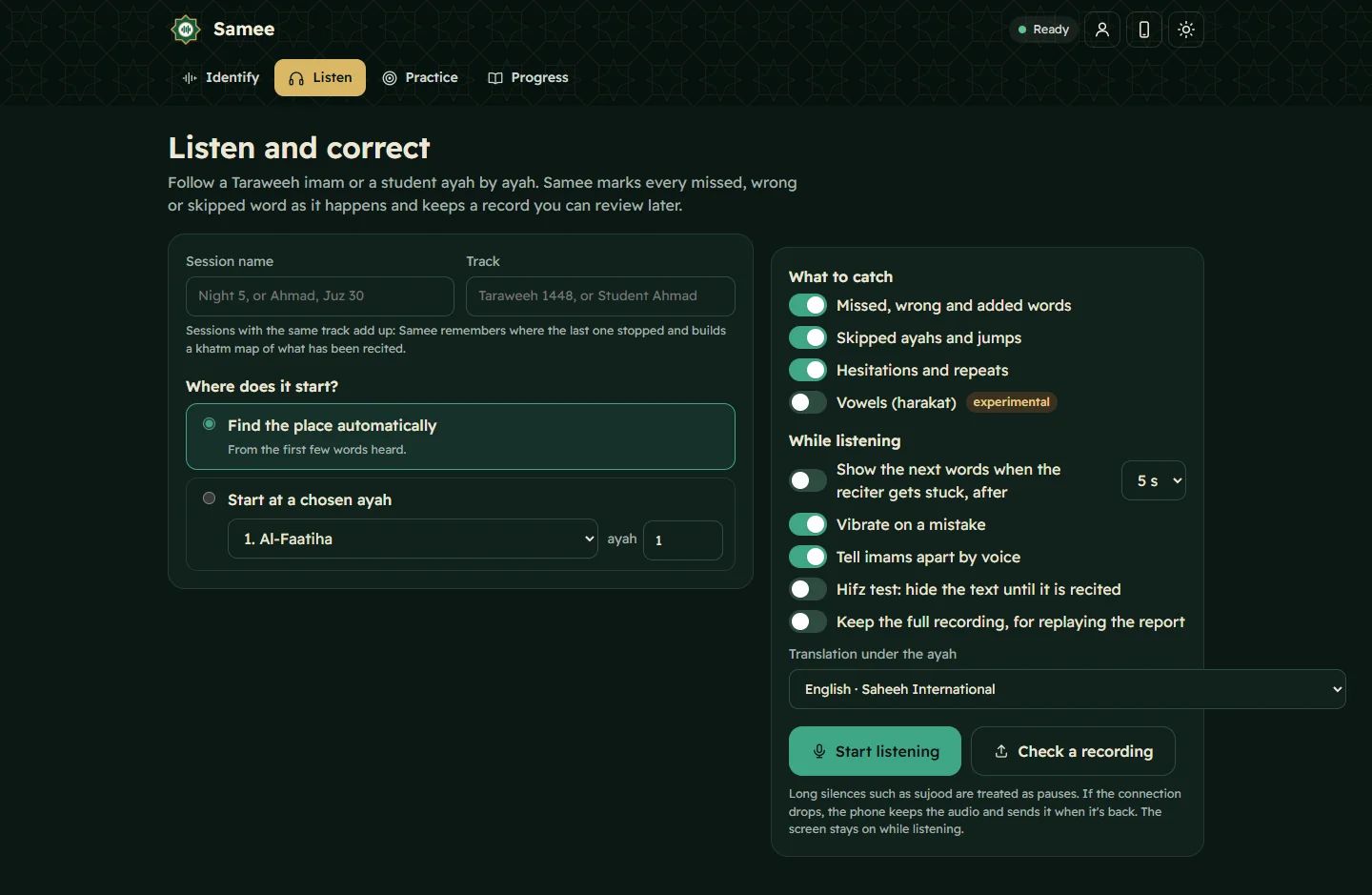
Following Taraweeh: the mushaf, correcting the imam and a listener
A hafiz behind the imam can prompt him when he errs. Holding a mushaf in prayer is debated between the schools. A listener app is best used by someone not praying, or to review afterwards.
How to complete a khatm of the Quran in Ramadan: a realistic plan
The 604-page mushaf has 30 juz, so one khatm in Ramadan is about one juz, or 20 pages, a day. Four pages after each of the five prayers does it. Plan for 29 days and keep a catch-up slot.
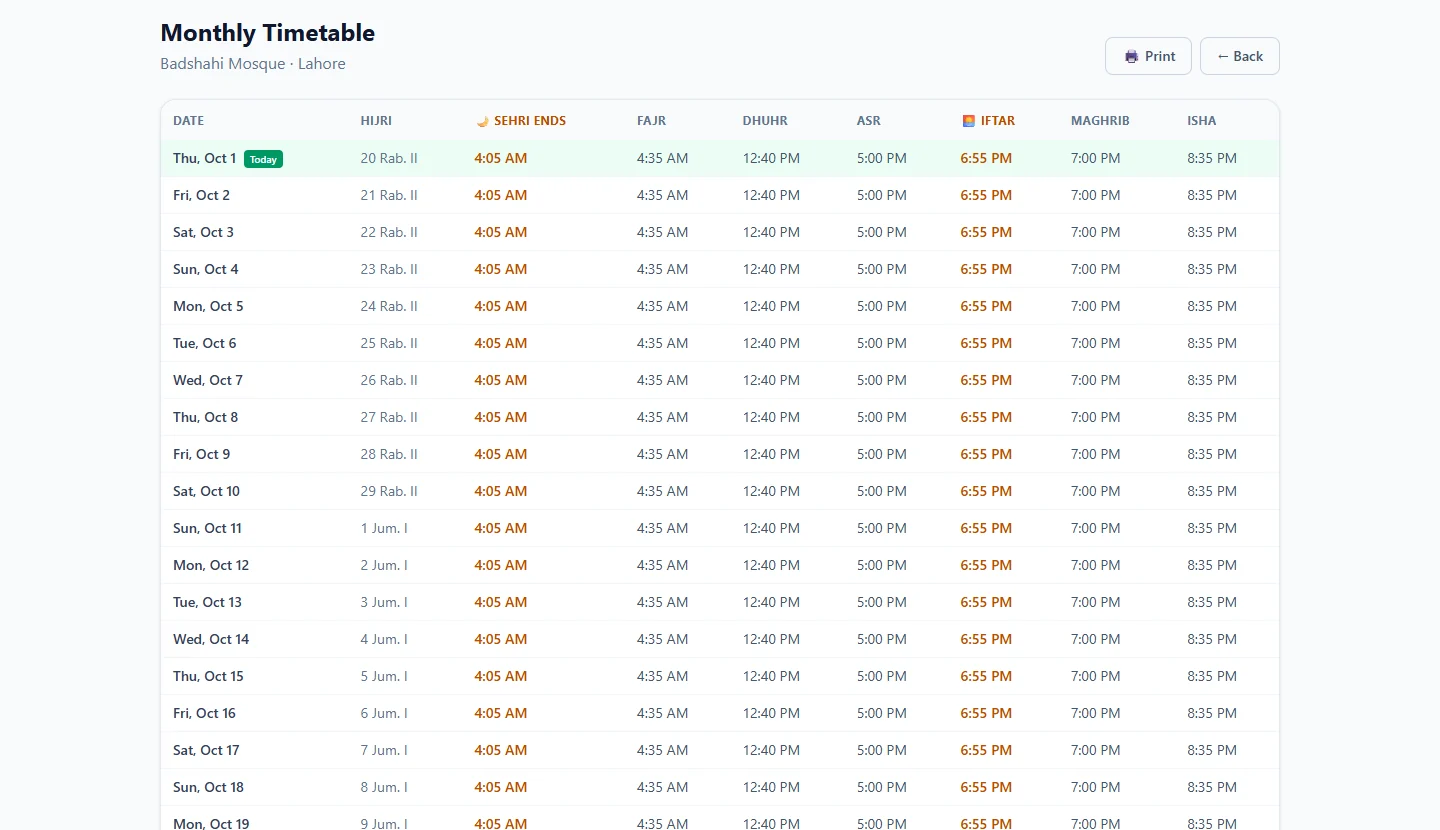
Suhoor and iftar times: a practical guide to timing your Ramadan fast
The fast runs from true dawn (Fajr) to sunset (Maghrib). Finish suhoor before your mosque's Sehri or Imsak time, break your fast at Maghrib, and follow your mosque.
Tracks and the khatm map: see how much has been recited
Give sessions the same track name, such as Taraweeh 1448 or Student Ahmad, and Samee continues each from where the last stopped and draws a khatm map of the mushaf, page by page, with the gaps.
Update your mosque's prayer timings, Ramadan and Eid times
Open Manage Mosque → Prayer Timings on the website, or My mosques → your mosque → Prayer timings in the app, enter Adhan and Iqaamah for each prayer and Jumuʼah, and save. Changes show at once.
Find Jumuʼah, Ramadan, Tarawih and Eid prayer times
Jumuʼah has its own row in each mosque's timetable. In Ramadan a mosque can switch to a seasonal timetable and publish Sehri, Iftar, Tarawih and Eid times, which appear as the dates approach.