Following Taraweeh: the mushaf, correcting the imam and a listener
A hafiz behind the imam can prompt him when he errs. Holding a mushaf in prayer is debated between the schools. A listener app is best used by someone not praying, or to review afterwards.
On this page
Many people want to follow the recitation in Taraweeh closely, either to help the imam when he makes a mistake or to check their own memorisation against his. Traditionally a hafiz stands behind the imam and prompts him when he gets stuck. Some worshippers hold a mushaf, a practice on which the schools of fiqh differ. A listener app such as Samee can follow the recitation word by word, and is best used outside the prayer: by someone who isn't praying, or to review the night afterwards.
This article sets out the traditional practice and the main views, then shows where a listener fits. It isn't a fatwa; on questions of the prayer, follow your mosque and ask a scholar you trust.
The hafiz behind the imam
In many mosques, a hafiz or two stand in the first row behind the imam during Taraweeh. If the imam stops and can't find the next words, or recites a clear mistake, the hafiz recites the correct words aloud so that he can continue. In Arabic this is called al-fath 'ala al-imam, literally "opening for the imam", and it is a form of talqeen, or prompting.
The practice goes back to the early generations, and collections of hadith such as Sunan Abi Dawud have chapters on it. The schools differ in the details, for example when prompting is appropriate, and whether to prompt straight away or give the imam a moment to correct himself. Some common etiquette:
- One prompter. Several voices at once confuse the imam. Mosques often agree in advance who will prompt.
- Only clear mistakes. A changed or missed word, a skipped ayah, a jump to another surah, or the imam stopping. Not a difference of style.
- Give him a moment. Many imams correct themselves after a breath.
- The right words, once. Recite the words where he should continue, clearly, then let him carry on.
Holding a mushaf during the prayer
Some worshippers follow the imam with a mushaf in hand, so they can check the recitation and prompt him. Others think this should be avoided. The views, in brief:
- The Hanafi school does not allow reading from a mushaf in prayer: Abu Hanifa held that it invalidates the prayer, and his two companions that it is disliked.
- The Maliki school is generally reported to allow it in voluntary prayers such as Taraweeh, when needed, while disliking it in obligatory ones.
- The Shafi'i and Hanbali schools generally allow reading from a mushaf, especially in voluntary prayers. Those who allow it often cite a report, mentioned by al-Bukhari without a full chain, that Dhakwan led 'A'isha in prayer reading from the mushaf.
Those discussions are mostly about the imam reading from a mushaf. For a follower holding one only to check the imam, contemporary scholars differ again. Some allow it when there is a need, for example when the mosque has no hafiz to prompt. Others discourage it, because it means extra movement and takes the hands from their place in the prayer, and the follower's task is to listen.
If your mosque has a practice, follow it. If you're unsure, ask your imam or a scholar.
Phones in the mosque
A phone can now do what the mushaf in the hand was used for, and more. That brings its own etiquette:
- Don't operate your phone while you pray. Set everything up before the prayer starts, or leave it to someone who isn't praying.
- Silent mode, screen down. A lit screen or a vibration distracts the people beside you.
- Ask before recording. Ask the imam or the mosque before you record. Some mosques have a policy.
- Place it, don't hold it. A shelf or stand near a loudspeaker hears better than a pocket.
How a listener app helps
A listener app follows the recitation in the mushaf, word by word, and notes what doesn't match. With Samee:
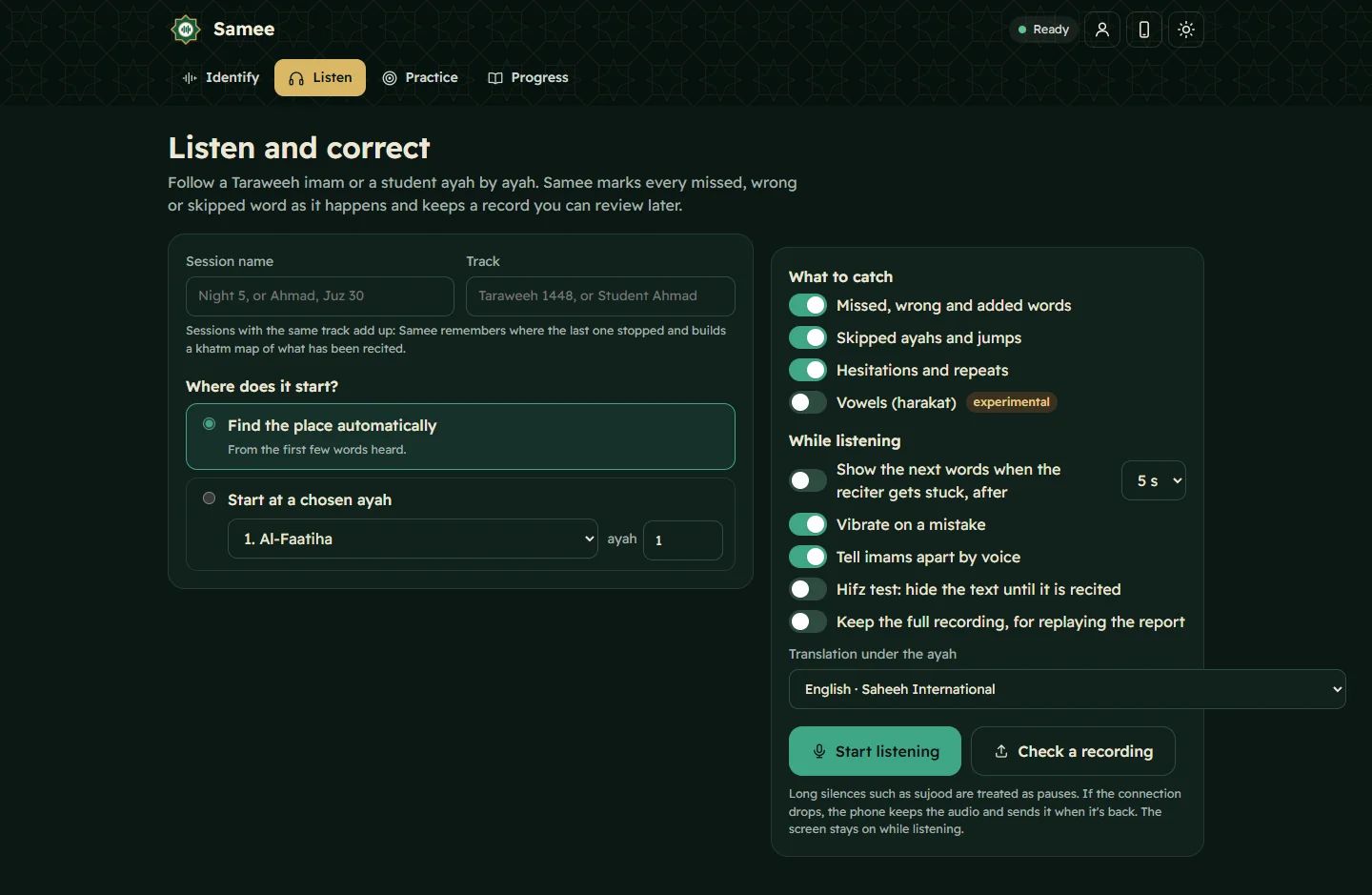
- Before the prayer, open Listen, name the session (Night 12) and the track (Taraweeh 1448), and choose where it starts, or let the track continue from last night.
- During the prayer, the phone does the following. Samee expects the shape of Taraweeh: Al-Fatiha opening each rak'ah, a silent basmalah, long silences in ruku and sujood, the sajdah of recitation and the qunoot of Witr. It doesn't mark these as mistakes. When imams take turns, it tells them apart by voice.
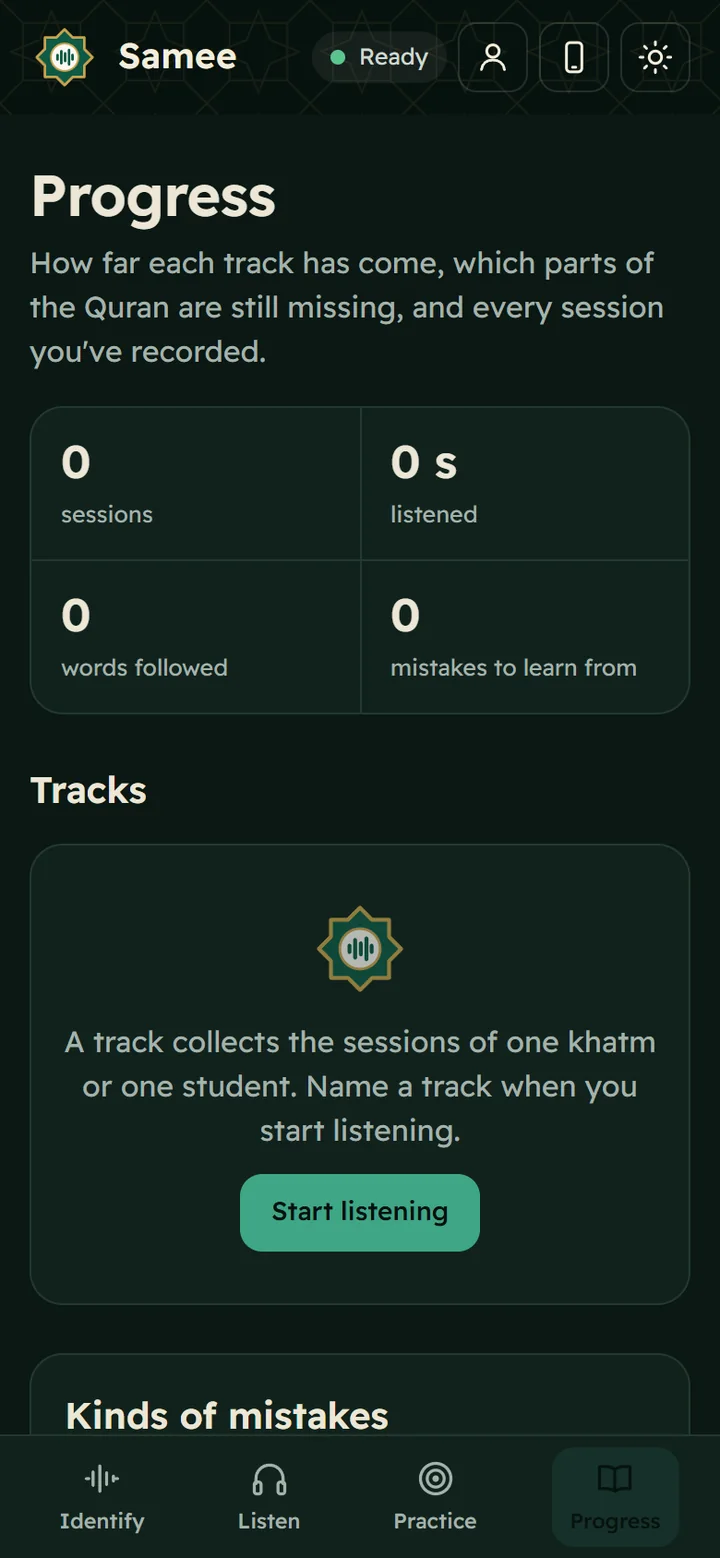
- After the prayer, open the report: skipped ayahs, missed or changed words, jumps to a similar passage and long hesitations, each with a short clip. The track's khatm map shows how far the Ramadan khatm has come and where the gaps are.
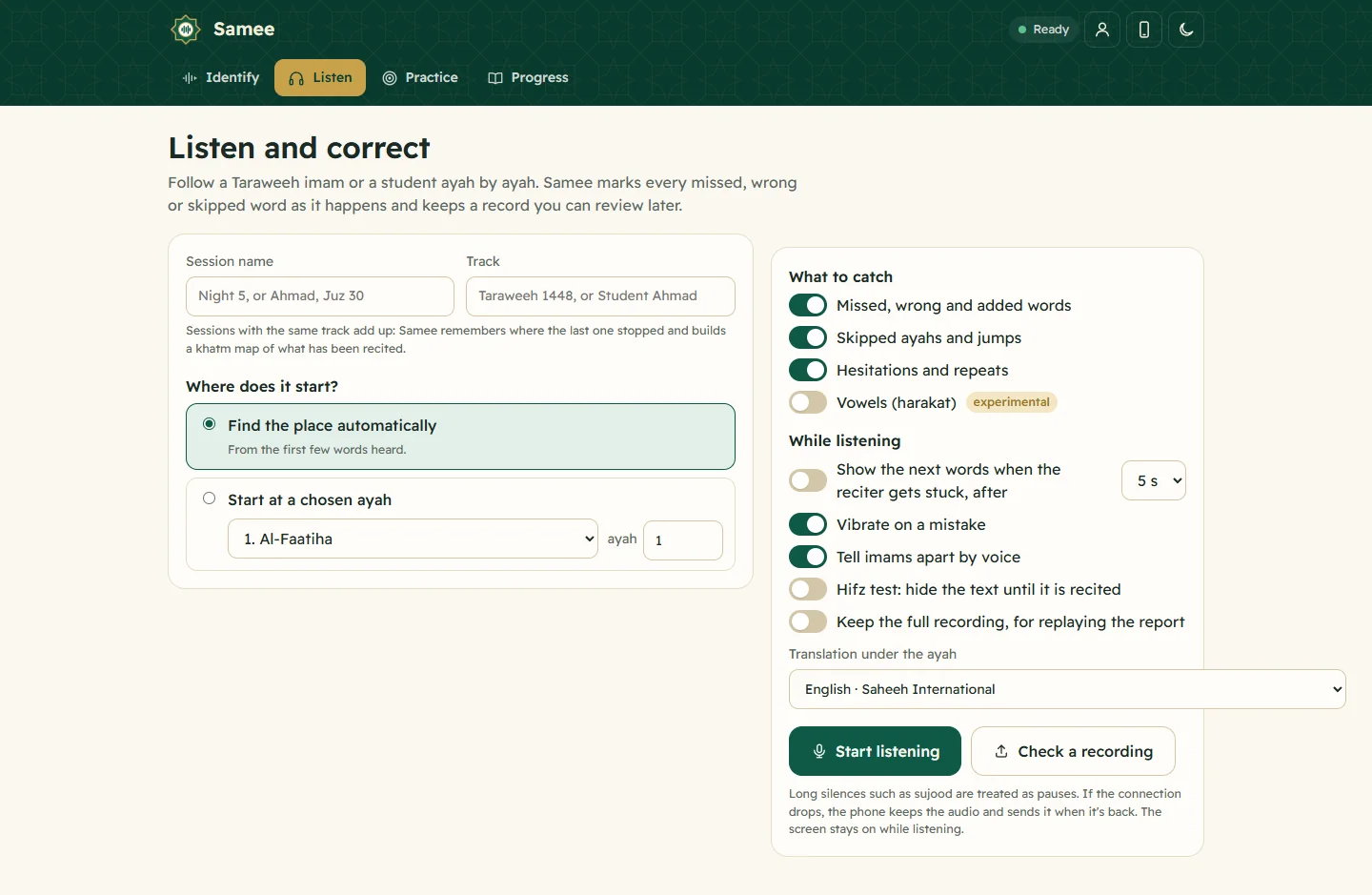
If someone who isn't praying is following, for example a teacher sitting at the back or a person listening at home to a live stream, Samee can also show the next words when the imam stops mid-ayah, so a prompt can be given quickly and correctly. See talqeen in Samee.
The full set-up is in follow a reciter live, and the Taraweeh specifics in rak'ahs, sajdah, qunoot and imams.
For imams: reviewing your own recitation
Leading Taraweeh from memory is demanding, and every imam has places where he hesitates or confuses similar passages. A recording reviewed calmly the next morning shows them without anyone having to point them out.
- Keep a track for your Ramadan, so the nights add up.
- After each night, go through the report. Dismiss what Samee got wrong; confirm what was a real slip.
- Before the next night, open Practice: your weak ayahs are listed with the most mistakes first. Listen to a reciter on repeat, then recite them with the text hidden.
A word of balance
The purpose of Taraweeh is the prayer and the Quran, not a perfect report. A listener should make it easier to follow and correct the recitation, not turn worshippers into inspectors. Use it with that intention, keep the adab of the mosque, and leave the imam's dignity intact: if you share a report, share it privately and kindly.
Frequently asked questions
Is it allowed to hold a mushaf while praying Taraweeh behind the imam?
Scholars differ. The Hanafi school does not allow reading from a mushaf in prayer, while others permit it in voluntary prayers, and contemporary scholars disagree about a follower holding one only to check the imam. Follow your mosque's practice and ask a scholar.
Can I correct the imam if he makes a mistake in Taraweeh?
Prompting the imam when he gets stuck or makes a clear mistake is an established practice, and is usually left to a hafiz standing close behind him. The schools have their own details, so follow your mosque's arrangement.
Can I use my phone to follow the imam during prayer?
It's better not to operate a phone while you pray. If you want a record of the recitation, set a listener app up before the prayer, let someone who isn't praying hold it, or review the recording afterwards.
How can an imam check his own Taraweeh recitation?
Record the night with a listener app, then review the report afterwards: skipped ayahs, missed or changed words and the places he hesitated, each with a short clip. Practise those ayahs before the next night.
Was this post helpful?